
The Frustration of Doing Everything Right
You follow the advice. You cut calories, choose salads over sandwiches, and dedicate hours to the gym each week. Yet, that stubborn belly fat remains, a frustrating reminder of a battle you feel you’re losing. If you’re feeling stuck, wondering why the scale won’t budge despite your best efforts, you are not alone. This experience is incredibly common and often points to deeper issues beyond simple calories in, calories out.
The truth is, persistent abdominal fat is often a symptom of underlying biological processes that aren’t being addressed by conventional diet and exercise. It’s not about a lack of willpower; it’s about understanding the complex science of your own body. This article will explore the hidden causes of stubborn belly fat, moving beyond the surface-level advice to give you the insights needed to finally make progress.
The Usual Suspects: Why Common Advice Falls Short
Before we delve into the lesser-known factors, it’s important to acknowledge the fundamentals. However, even these have nuances that are often overlooked.
Hormonal Imbalances: The Unseen Puppeteers
Hormones act as chemical messengers that control everything from your mood to your metabolism. When they are out of balance, weight management can feel like an impossible task. Cortisol, often called the “stress hormone,” is a major culprit. When you’re chronically stressed, your body produces excess cortisol, which signals the body to store fat, particularly in the abdominal region. Similarly, imbalances in insulin, thyroid hormones, and sex hormones like estrogen can all contribute to weight gain around the midsection.
The Impact of Chronic Stress and Cortisol
Modern life is a recipe for chronic stress. Work deadlines, financial pressures, and even the constant stream of information from our phones can keep our bodies in a perpetual state of “fight or flight.” This elevated cortisol level not only encourages fat storage but can also increase cravings for high-sugar, high-fat foods, creating a vicious cycle that is difficult to break. Managing stress is not a luxury; it’s a critical component of managing belly fat.
Poor Sleep and Its Metabolic Consequences
Never underestimate the power of a good night’s sleep. Lack of quality sleep disrupts the hormones that regulate appetite—ghrelin (the hunger hormone) and leptin (the satiety hormone). When you’re sleep-deprived, ghrelin levels rise while leptin levels fall, making you feel hungrier and less satisfied by the food you eat. Furthermore, poor sleep can decrease insulin sensitivity, making it harder for your body to process sugar and increasing the likelihood of fat storage.

The Cellular Engine: A Key Cause of Stubborn Belly Fat
If you’ve addressed the factors above and still see no change, it might be time to look deeper—at a cellular level. One of the most fascinating and often overlooked causes of stubborn belly fat lies in the type of fat your body has and how efficiently your cellular engines, the mitochondria, are working.
Understanding White Fat vs. Brown Fat (BAT)
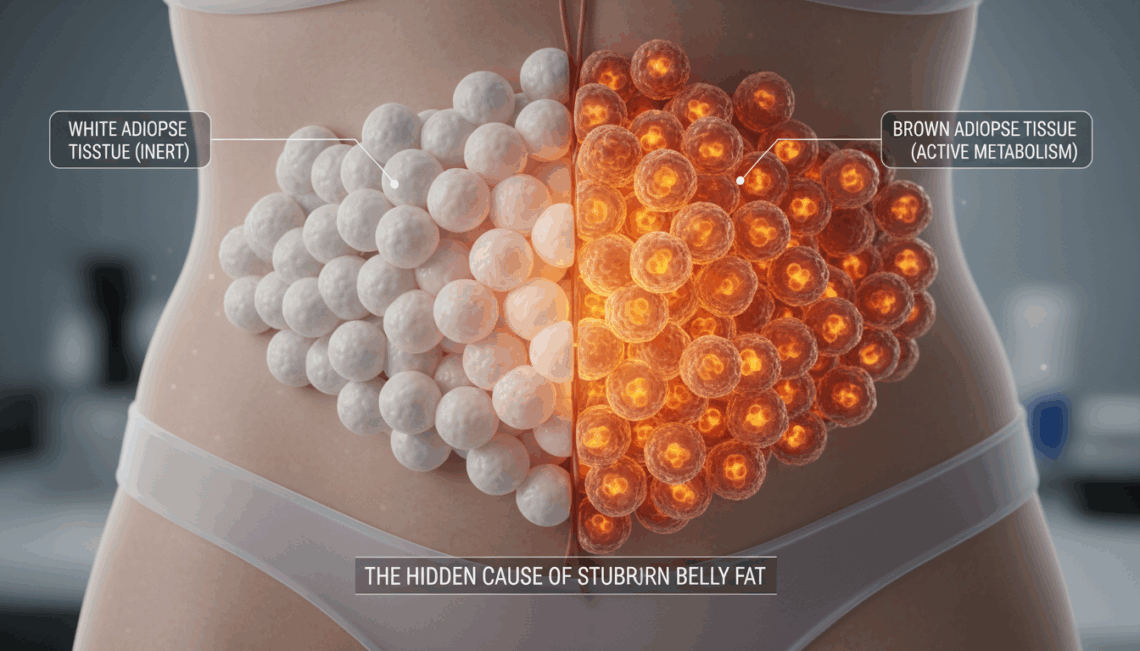
Your body contains different types of fat. The most common is white adipose tissue (WAT), or white fat. Its primary job is to store energy in the form of large, single droplets of lipids. This is the jiggly fat that accumulates on your belly, hips, and thighs.
However, you also have brown adipose tissue (BAT), or brown fat. Unlike white fat, brown fat’s job is not to store energy but to burn it to produce heat, a process called thermogenesis. Brown fat is packed with iron-rich mitochondria, which give it its characteristic color. Think of it as a metabolic furnace. Babies have a lot of it to stay warm, but we now know that adults retain some as well, and activating it can have a significant impact on metabolism.
How Brown Adipose Tissue (BAT) Burns Calories
When activated, BAT can burn a significant number of calories, far more than an equivalent amount of muscle tissue. It essentially takes calories from food and from existing white fat stores and converts them into heat. Research has shown that individuals with higher levels of active BAT tend to be leaner and have better metabolic health. The problem is, for many people struggling with weight, their BAT levels are low or their brown fat is not easily activated.
A Targeted Approach to a Core Problem
Understanding the role of brown fat and mitochondrial health opens up a new perspective on weight management. If one of the core causes of stubborn belly fat is low BAT activity, then a logical approach would be to find ways to support and activate this metabolic tissue. While general lifestyle changes like cold exposure and certain exercises can help, many people are looking for a more direct way to support this cellular process.
This is where specialized formulations can play a role. Products like Mitolyn are designed with this specific biological mechanism in mind. It is formulated as a “Brown Fat Serum” that aims to support the body’s natural ability to activate these calorie-burning cells. By providing a blend of ingredients known to support mitochondrial health and thermogenesis, it offers a targeted strategy that complements diet and exercise efforts. It’s designed for the person who feels their metabolism is “stuck” and suspects there’s a deeper reason their body is holding onto fat.
Practical Lifestyle Adjustments to Support Your Goals
While a targeted serum can provide support, integrating it with healthy lifestyle habits will always yield the best results. Here are some actionable steps you can take:
- Incorporate Protein and Fiber: Both are highly satiating and have a higher thermic effect of food, meaning your body burns more calories digesting them.
- Prioritize Stress Management: Whether it’s through meditation, yoga, deep breathing exercises, or simply taking walks in nature, actively work to lower your cortisol levels.
- Focus on Strength Training: Building muscle mass increases your overall resting metabolic rate, helping your body burn more calories even when you’re not active.
- Stay Hydrated: Water is essential for every metabolic process in your body. Sometimes, feeling sluggish is simply a sign of dehydration.
Conclusion: Understanding is the First Step
The journey to losing stubborn belly fat is not about punishment or restriction. It’s about understanding. By looking beyond the obvious and exploring the hidden causes of stubborn belly fat—from hormonal shifts and stress to the critical role of brown adipose tissue—you empower yourself with the knowledge to make smarter, more effective choices. Your body isn’t working against you; it’s simply responding to a complex set of signals. By changing those signals and supporting your cellular health, you can finally begin to work with your body to achieve the lasting results you deserve.
Frequently Asked Questions (FAQ)
What is the main cause of stubborn belly fat?
While there is no single answer for everyone, many experts now point to a combination of factors beyond diet, including hormonal imbalances (especially high cortisol from stress), poor sleep, and low activity of Brown Adipose Tissue (BAT), the body’s “good” fat that burns calories.
Can supplements really help with this issue?
No supplement is a magic pill. However, a well-formulated supplement can support the body’s natural processes. For example, ingredients that support mitochondrial health and the activation of brown fat can complement a healthy lifestyle by addressing a specific biological mechanism that may be hindering progress. Always choose high-quality products and consult with a healthcare professional.
How long does it take to see changes?
Results vary greatly depending on the individual, their starting point, diet, exercise habits, and consistency. The key is to think of it as a long-term lifestyle adjustment rather than a quick fix. Addressing the root causes takes time, but the changes are more likely to be sustainable.