
The Gut-Skin Axis: Unlocking the Secret to Clearer Skin
For countless individuals, the quest for clear, radiant skin is a frustrating journey filled with expensive creams, restrictive diets, and appointments with specialists. You might be dealing with persistent acne, unexplainable rashes, rosacea, or eczema that just won’t quit. But what if the root of the problem isn’t on your skin at all? What if it’s deep within your digestive system? This is where we uncover the critical connection between leaky gut and skin problems, a concept known as the gut-skin axis.
Many are surprised to learn that the health of our gut is profoundly reflected in the appearance and health of our skin. If you feel like you’ve tried everything to solve your skin woes without lasting success, understanding this connection might be the final piece of the puzzle. It’s time to look beyond surface-level treatments and explore the foundational source of vibrant health: your gut.
What Exactly Is Leaky Gut Syndrome?
Imagine your intestinal lining as a tightly controlled gateway. It’s made up of a wall of cells linked together by proteins called “tight junctions.” In a healthy gut, this barrier is strong and selective, allowing only digested nutrients, water, and minerals to pass into your bloodstream. It’s designed to keep out undigested food particles, toxins, and harmful bacteria.
Leaky gut syndrome, or “increased intestinal permeability,” occurs when these tight junctions loosen. The gateway becomes compromised. This allows those unwanted substances—toxins, microbes, and undigested food—to “leak” from your intestines and enter your bloodstream. When your body detects these foreign invaders, it triggers a system-wide immune response, leading to chronic inflammation.
What Causes the Gut Lining to Weaken?
- Poor Diet: High consumption of processed foods, sugar, and alcohol can irritate the gut lining.
- Chronic Stress: High levels of cortisol, the stress hormone, can negatively impact gut barrier function.
- Gut Dysbiosis: An imbalance between beneficial and harmful bacteria in your gut can contribute to inflammation.
- Certain Medications: Overuse of non-steroidal anti-inflammatory drugs (NSAIDs) can damage the intestinal wall.
The Gut-Skin Axis: Unraveling the Connection
The gut-skin axis is the bidirectional communication pathway between your digestive system and your skin. When your gut is inflamed and permeable, that inflammation doesn’t stay localized. The immune response triggered by particles leaking into your bloodstream is systemic, and the skin is often one of the first places it shows up.
Think of it like this: your immune system sounds the alarm, and inflammatory messengers are dispatched throughout your body. These messengers can disrupt the normal functions of your skin, leading to a variety of issues. The link between leaky gut and skin problems isn’t just a theory; it’s an area of growing scientific research highlighting how internal health dictates external appearance.
Common Skin Conditions Linked to Gut Health
- Acne: Systemic inflammation can increase sebum (oil) production and contribute to clogged pores and breakouts.
- Eczema (Atopic Dermatitis): Many studies show a strong correlation between gut dysbiosis and the severity of eczema flare-ups.
- Rosacea: This inflammatory skin condition is often linked to an overgrowth of bacteria in the small intestine (SIBO) and general gut inflammation.
- Psoriasis: As an autoimmune condition, psoriasis is heavily influenced by immune system activity, which is largely regulated by the gut.
Why Probiotics and Diet Alone May Not Be Enough
When people learn about gut health, the first steps are often adding probiotics and cleaning up their diet. These are excellent and essential strategies. Probiotics introduce beneficial bacteria, and a whole-foods diet provides the fiber needed to feed them. However, for many, this doesn’t fully solve the problem.
If the gut lining itself is severely compromised, simply adding good bacteria can be like planting a garden in barren soil. The environment isn’t healthy enough for them to thrive and do their job effectively. You need to repair the foundation first—the intestinal wall itself. This requires a more targeted approach that directly nourishes and rebuilds the gut barrier.
The Power of Postbiotics and Butyrate
This is where the science of gut health gets exciting. While probiotics are live beneficial bacteria, postbiotics are the beneficial compounds those bacteria produce when they ferment fiber. One of the most important postbiotics for gut barrier health is a short-chain fatty acid (SCFA) called butyrate.
Butyrate is the primary fuel source for the cells that make up your colon lining. It gives them the energy they need to stay healthy, regenerate, and maintain those crucial tight junctions. When butyrate levels are low, the gut barrier can weaken, leading to permeability. Therefore, directly supplementing with a high-quality source of butyrate can be a game-changer for healing a leaky gut.
A Targeted Approach to Healing the Gut Lining
While our bodies can produce butyrate, factors like a low-fiber diet, stress, and dysbiosis can significantly reduce its production. Directly restoring these levels can provide the building blocks your gut needs to repair itself. This is why advanced formulas focused on delivering butyrate effectively are gaining attention as a powerful tool against leaky gut.
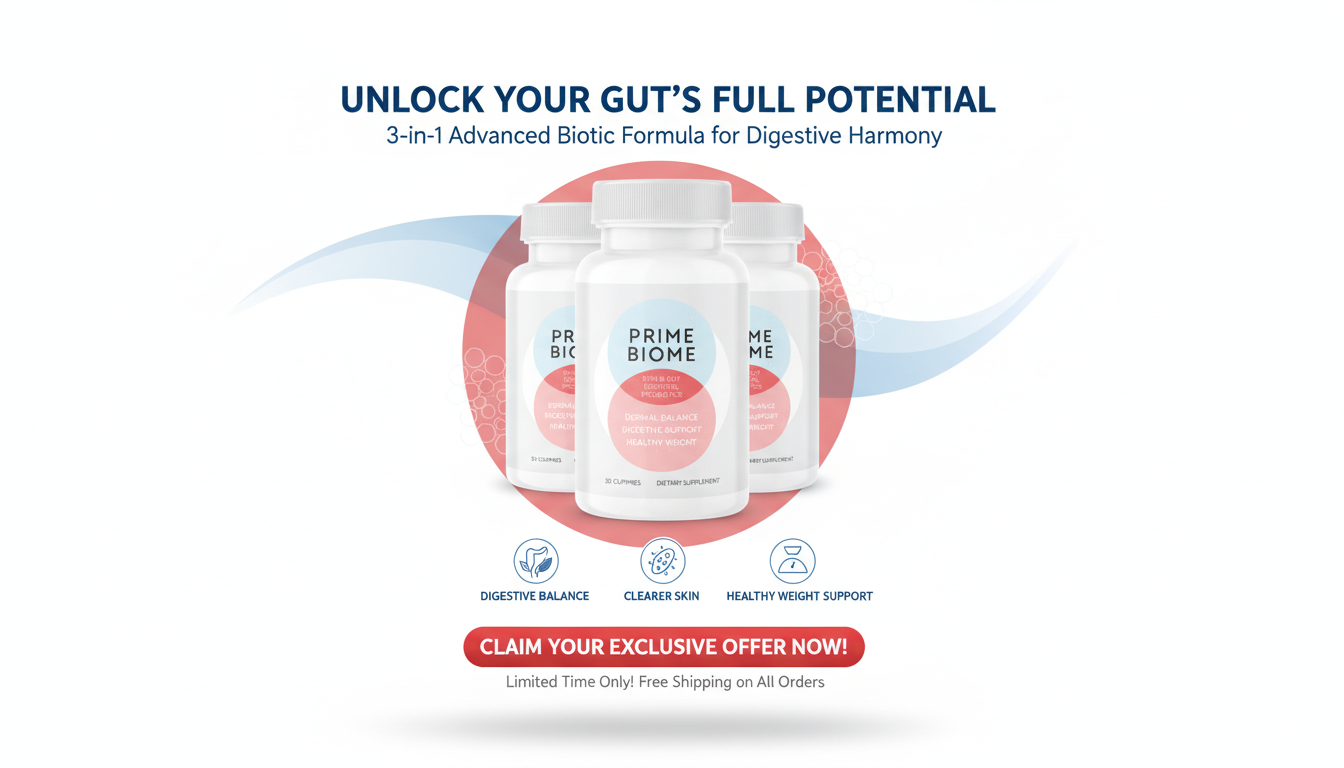
One of the most potent and bioavailable forms is a compound called Tributyrin. It’s a precursor to butyrate that is uniquely designed to travel through the stomach and small intestine to be delivered directly to the colon where it is most needed. For those struggling with the effects of a compromised gut, such as persistent skin issues, a targeted postbiotic formula like PrimeBiome can offer a strategic advantage. It focuses on the core issue: repairing the gut barrier to reduce systemic inflammation at its source.
Natural Ways to Support Your Gut-Skin Axis
While a targeted supplement can accelerate healing, a holistic approach is always best. Combining it with lifestyle changes creates a powerful synergy for long-term health.
1. Eat a Fiber-Rich, Anti-Inflammatory Diet
Focus on whole foods rich in prebiotic fiber, which feeds your good gut bacteria so they can produce more butyrate naturally. Include a variety of colorful fruits and vegetables, legumes, nuts, and whole grains. Omega-3 fatty acids found in fish and flaxseeds are also excellent for reducing inflammation.
2. Manage Stress Effectively
Chronic stress is a known enemy of gut health. Incorporate stress-reducing practices into your daily routine. This could be meditation, deep breathing exercises, yoga, spending time in nature, or simply setting aside time for hobbies you enjoy. Your gut—and your skin—will thank you.
3. Prioritize Quality Sleep
Sleep is when your body undergoes its most critical repair processes, including in the gut. Aim for 7-9 hours of quality, uninterrupted sleep per night. A lack of sleep can increase inflammation and negatively impact both your gut microbiome and your skin’s ability to heal.
4. Stay Hydrated
Water is essential for maintaining the mucosal lining of the intestines and for promoting the balance of good bacteria in the gut. Ensure you are drinking an adequate amount of water throughout the day to support overall digestive health.
The Journey to Healthier Skin Starts Within
In conclusion, the connection between leaky gut and skin problems is a fundamental aspect of our biology that is too often overlooked. Treating skin conditions with topical solutions alone is like painting over a crack in a faulty foundation—it’s a temporary fix that doesn’t address the underlying issue. True, lasting skin health begins with a happy, sealed, and well-nourished gut.
By understanding the gut-skin axis and taking proactive steps to heal your intestinal lining, you can tackle the root cause of inflammation. A holistic approach that includes a healthy diet, stress management, and targeted supplementation with a powerful postbiotic like Tributyrin can provide the comprehensive support your body needs to restore balance. This journey is not about finding a magic cure, but about nurturing your body from the inside out, leading to the clear, vibrant skin you deserve.
As always, it is recommended to consult with a healthcare professional before beginning any new supplement regimen to ensure it is appropriate for your individual health needs.