Tired of Crepey Skin? Here’s What Might Be Happening
If you’ve noticed areas where your skin has become thin, fragile, and finely wrinkled—almost like crepe paper—you’re not alone. This condition, known as crepey skin, is a common frustration for many. It often appears on the face, neck, arms, and legs, making the skin look prematurely aged and tired. You might be diligently moisturizing and trying various creams, but finding a true crepey skin solution can feel like an uphill battle.
The truth is, many surface-level treatments fail to address the deeper issues causing the skin to lose its structure. In this guide, we’ll dive into the real causes of crepey skin, from the usual suspects to a critical factor that is often overlooked: cellular energy. Understanding the “why” is the first step toward finding a solution that truly revitalizes your skin’s appearance.
What Exactly Is Crepey Skin?
It’s important to distinguish crepey skin from regular wrinkles. While wrinkles are typically lines that form from repetitive muscle movements (like smile or frown lines), crepey skin is a more widespread issue of texture. It involves thin, saggy, and finely wrinkled skin that lacks its former resilience and plumpness. When you pinch it, it doesn’t bounce back quickly and may even hold the crease for a moment.
The Vicious Cycle: What Causes Crepey Skin?
Crepey skin isn’t caused by a single factor but rather a combination of internal and external processes that degrade the skin’s structural integrity over time.
Sun Damage: The Primary Culprit
Years of unprotected sun exposure are the number one cause of crepey skin. Ultraviolet (UV) rays break down collagen and elastin, the two essential proteins that give your skin its firmness and elasticity. Think of them as the scaffolding that holds your skin up. When that scaffolding weakens, the skin begins to sag and crinkle.
The Natural Decline of Collagen and Elastin
Even without sun damage, our bodies naturally produce less collagen and elastin as we age. Starting in our late 20s, collagen production drops by about 1% each year. Over decades, this gradual loss leads to thinner, less resilient skin that is more susceptible to developing a crepey texture.
Dehydration’s Hidden Role
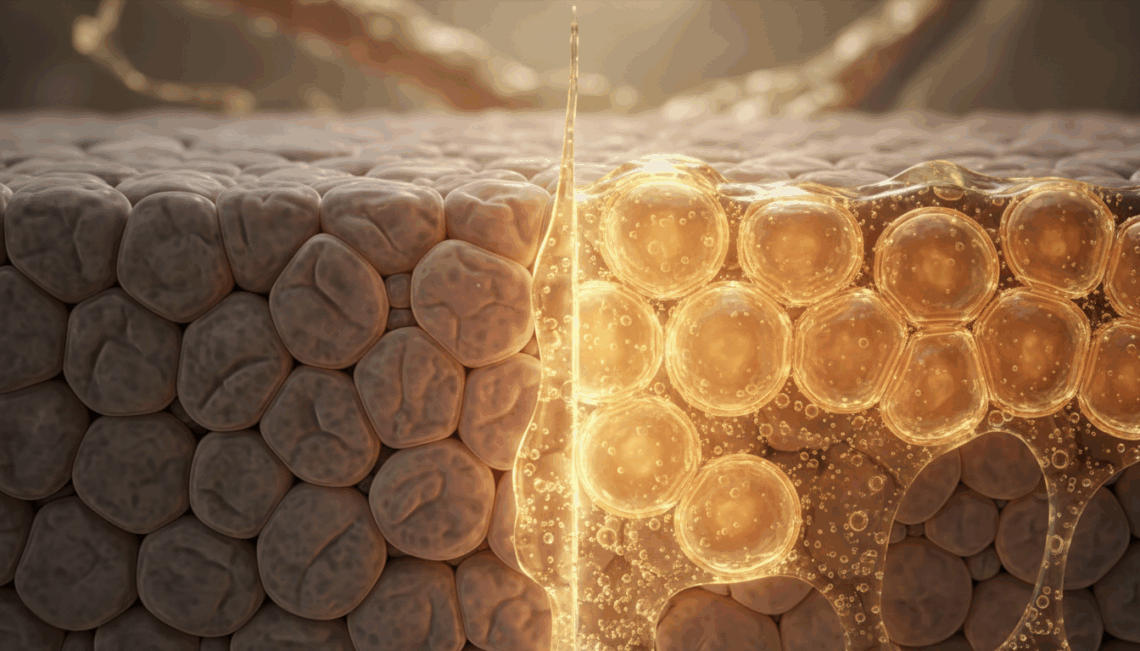
Skin that lacks moisture is skin that lacks volume. While drinking water is important, proper skin hydration also depends on its ability to retain moisture. A compromised skin barrier and a lack of hydrating substances within the skin can lead to a deflated, crinkled appearance, significantly worsening the look of crepey skin.
The Overlooked Factor: Declining Cellular Energy
Here is the piece of the puzzle that many people miss. Your skin cells are powered by tiny engines called mitochondria. These organelles produce the energy (known as ATP) that skin cells need to perform their vital functions, including repairing damage and producing new collagen. As we age, mitochondrial function declines. The cells essentially run out of power. They become sluggish, can’t repair themselves effectively, and struggle to maintain the skin’s youthful structure. This energy crisis at the cellular level is a major contributor to the tired, saggy, and crepey look of aging skin.

Common Approaches to Managing Crepey Skin
Many people turn to a handful of common treatments to manage crepey skin, which often provide temporary or limited results because they don’t address all the underlying causes.
Moisturizers and Hydrating Ingredients
Ingredients like hyaluronic acid, glycerin, and ceramides are excellent for drawing moisture into the skin and supporting the skin barrier. A good moisturizer can temporarily plump up the skin, making the crepey texture less noticeable. However, this is often a surface-level fix that doesn’t rebuild the skin’s fundamental structure.
Exfoliation and Retinoids
Exfoliants, such as alpha-hydroxy acids (AHAs), can help remove the outer layer of dead skin cells, revealing smoother skin underneath and stimulating cell turnover. Retinoids (like retinol) are famous for their ability to boost collagen production over time. While these can be effective parts of a routine, they can also be irritating for some and may not be enough to counteract the cellular energy decline happening deep within the skin.
Why These Sometimes Aren’t Enough
When the core issue is that skin cells are too “tired” to function properly, even the best ingredients can’t work their magic. It’s like trying to run a high-performance engine on low-grade fuel. Without sufficient cellular energy, collagen synthesis remains slow, and the skin struggles to repair itself. This is why you might feel like you’ve hit a plateau with your current routine.
A Deeper Approach: A True Crepey Skin Solution
To truly improve the appearance of crepey skin, it makes sense to address the problem at its energy source. The focus is shifting toward supporting the skin’s natural energy production, helping cells function more like they did when they were younger. This is where a targeted approach can make a significant difference.
One product designed around this very principle is Mitolyn. It was formulated specifically to address the appearance of aging skin by targeting mitochondrial health. Its blend of ingredients is chosen to help support cellular energy, providing your skin cells with the resources they need to combat the visible signs of aging, including that frustrating crepey texture.
Rather than just layering on moisture or stimulating collagen with traditional methods, Mitolyn’s approach is to help re-energize the skin from within. Users have reported their skin appearing firmer, smoother, and more vibrant. By focusing on the root cause of cellular fatigue, it offers a more comprehensive crepey skin solution for those who feel they’ve tried everything else.
Final Thoughts on Reclaiming Your Skin’s Vitality
Dealing with crepey skin can be disheartening, but understanding its complex causes—especially the role of cellular energy—opens the door to more effective strategies. A holistic approach that includes sun protection, proper hydration, and a skincare routine targeting cellular health gives you the best chance at restoring a smoother, firmer, and more youthful appearance.
If you feel your current products aren’t delivering the results you want, exploring a solution like Mitolyn, which is built to address the energy decline in skin cells, could be the missing piece in your skincare puzzle. Remember, it’s never too late to give your skin the support it needs to look and feel its best.
As always, it is recommended to consult with a dermatologist to discuss your specific skin concerns and determine the best course of action for your skin type and health history. Individual results may vary.