
If you feel like you’re fighting a losing battle against the signs of aging, you are not alone. You’ve likely tried countless creams, serums, and lotions that promise to erase wrinkles, fade dark spots, and restore youthful firmness. Yet, despite the diligent routines and expensive products, the results are often temporary and underwhelming. This can be incredibly frustrating, leading many to wonder: what causes aging skin on a level that surface treatments just can’t seem to reach?
The truth is, many popular products only work on the outermost layer of the skin. They might provide temporary hydration or a fleeting plumping effect, but they don’t address the fundamental processes happening deep within your cells. The visible signs of aging—the fine lines, the loss of elasticity, the uneven tone—are symptoms of a much deeper issue. It’s time to look past the surface and understand what’s truly happening inside.
The Limits of Traditional Skincare
Think of your skin as a house. Many anti-aging products are like a fresh coat of paint. They can make the exterior look better for a while, covering up cracks and imperfections. But if the foundation is crumbling, no amount of paint will fix the underlying problem. Eventually, the cracks will reappear, sometimes worse than before.
Topical creams primarily work on the epidermis, the top layer of your skin. They can be excellent for hydration and protecting against environmental damage. However, the core processes that dictate your skin’s structure, firmness, and regenerative capacity happen in the deeper dermal layers. This is where the cellular machinery responsible for producing collagen and elastin resides. When this machinery slows down, the visible signs of aging accelerate, and a simple moisturizer isn’t equipped to restart it.
The Engine of Your Cells: What Causes Aging Skin?
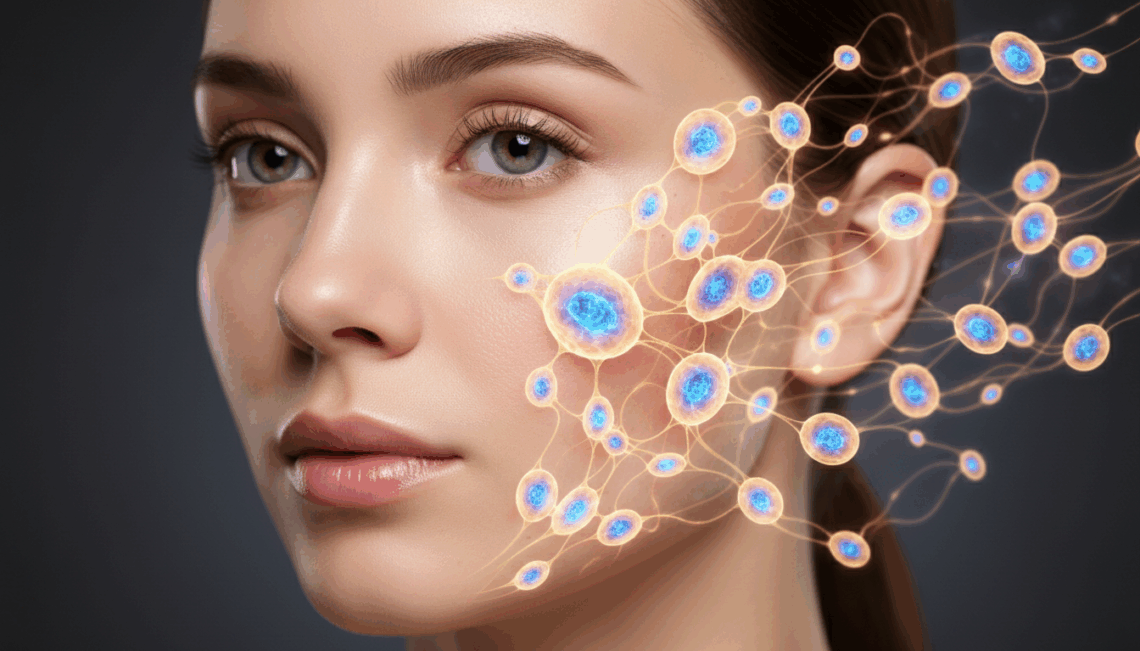
To understand the root cause, we need to zoom in—way in. Inside almost every cell in your body are tiny powerhouses called mitochondria. You might remember them from high school biology class as the “energy factories” of the cell. Their job is to convert nutrients into cellular energy (ATP), which fuels every single bodily function, including skin cell repair and regeneration.
When you’re young, your mitochondria are abundant and efficient. They produce all the energy your skin cells need to:
- Produce Collagen and Elastin: The proteins that keep skin firm, plump, and flexible.
- Repair Damage: Heal from sun exposure, pollution, and other stressors.
- Regenerate New Cells: Constantly turn over old, damaged cells for fresh, healthy ones.
A healthy, energetic cellular environment is the true secret to youthful-looking skin. It’s not about a single “miracle” ingredient, but about the overall vitality of your skin at a microscopic level.
Introducing “Mito-Decay”: The Hidden Culprit
As we age, our mitochondrial function naturally declines. This process, which some experts refer to as “Mito-Decay,” is a primary driver of the aging process throughout the body, and it’s especially visible in our skin. Over time, mitochondria can become damaged and dysfunctional. They produce less energy and more harmful free radicals, creating a toxic environment within the cell.
This leads to what can be described as “cellular clog.” Old, dysfunctional mitochondria accumulate, getting in the way of healthy cellular processes. They are too weak to power the cell effectively but too stubborn to be cleared away. The result? Skin cells that are sluggish, tired, and unable to perform their regenerative duties. This cellular energy crisis is what truly causes aging skin to manifest as:
- Wrinkles and Fine Lines: Collagen production plummets without adequate cellular energy.
- Sagging Skin: Elastin fibers weaken, leading to a loss of firmness.
- Dullness and Uneven Tone: Cell turnover slows, causing dead cells to build up on the surface.
- Dark Spots: The skin’s ability to manage pigment and repair sun damage is compromised.
You can apply the most expensive cream in the world, but if your cells are clogged and lack the energy to use the ingredients, you’re just painting over that crumbling foundation.

Can You Support Your Skin at the Cellular Level?
This all might sound discouraging, but understanding the problem is the first step toward finding a real solution. If the root issue is a decline in cellular energy and an accumulation of mitochondrial “clog,” then the logical approach is to address the problem at that level. The question becomes: how can you support your cells in clearing out the old, dysfunctional mitochondria and provide them with the nutrients they need to function optimally?
This is where a new generation of skincare science comes into play. The focus is shifting from topical concealment to cellular revitalization. The goal is to create an environment where the cells themselves have the energy and resources to behave like their younger counterparts. It involves providing specific nutrients that are known to play a crucial role in mitochondrial health and cellular energy production.
A New Approach: Dermal Nutrient Infusion
One of the most promising innovations in this field is the concept of a “Dermal Nutrient Infusion.” This isn’t just another cream; it’s a targeted system designed to deliver key nutrients directly to the skin to support mitochondrial health. A leading example of this approach is a product called Mitolyn.
Mitolyn was formulated based on the principle of addressing “Mito-Decay.” Its purpose is to help the skin in two fundamental ways:
- Support the Clearing of “Cellular Clog”: It contains ingredients that are intended to support the body’s natural process of breaking down and removing old, dysfunctional mitochondria.
- Nourish Healthy Mitochondria: It delivers a blend of nutrients, like D-Ribose and L-Carnitine, which are essential for energy production within healthy mitochondria.
By tackling both sides of the problem, this approach aims to restore the energetic environment your skin cells need to function properly. When cells have more energy, they can get back to their essential jobs, like producing robust collagen and elastin fibers. This represents a foundational shift—from masking the signs of aging to addressing a primary underlying cause.
Conclusion: A Deeper Strategy for Youthful Skin
The persistent signs of aging that don’t respond to conventional treatments are often a sign that the problem runs deeper than the surface. The science of cellular health shows us that the vitality of our mitochondria is directly linked to the youthful appearance of our skin. When these cellular engines get clogged and slow down, our skin loses its firmness, radiance, and resilience.
Understanding what causes aging skin at the cellular level empowers you to make more informed choices. Instead of just adding another layer of paint, you can start focusing on rebuilding the foundation. An approach like the Dermal Nutrient Infusion offered by Mitolyn is designed to do just that—providing your cells with the support they need to reclaim their energy and function. For anyone serious about achieving lasting, visible results, looking deeper is no longer an option; it’s a necessity.
Disclaimer: The information in this article is for educational purposes only and is not intended as medical advice. The products and claims made about specific products on or through this site have not been evaluated by the United States Food and Drug Administration and are not approved to diagnose, treat, cure or prevent disease. Please consult with a qualified healthcare professional or dermatologist before starting any new skincare regimen or supplement.