The Frustrating Reality of Loose Skin and What It Means
There’s a moment many of us experience. We look in the mirror one day and notice that the reflection doesn’t quite match the vibrant, energetic person we feel like inside. The skin on our face, particularly around the jawline, cheeks, and neck, just doesn’t seem to have the same snap and firmness it once did. This is a deeply frustrating experience, and if you’ve started searching for how to tighten loose skin on your face, you’re not alone. It’s one of the most common aesthetic concerns that comes with age, and it can subtly erode confidence.
For decades, the conversation around aging skin has been dominated by two things: wrinkles and moisture. We’ve been told to hydrate, exfoliate, and use creams that promise to fill in fine lines. But the issue of skin laxity—that loss of firmness and elasticity—is a different, more complex challenge. It’s what can change the very contours of our face. The real question isn’t just about surface-level wrinkles; it’s about restoring the underlying structure and vitality that gives skin its youthful bounce.
Why Does Skin Lose Its Firmness? The Usual Suspects
Before diving into new approaches, it’s crucial to understand the foundational reasons why our skin begins to sag. This isn’t just about getting older; it’s about specific biological processes that slow down and become less efficient over time.
1. The Collapse of Your Skin’s Scaffolding: Collagen and Elastin
Think of collagen as the primary framework or “scaffolding” that holds your skin up, giving it structure and volume. Elastin, as the name suggests, is the protein that provides elasticity, allowing your skin to stretch and snap back into place. Starting in our mid-20s, our bodies begin to produce less collagen and elastin each year. Environmental factors like sun exposure and lifestyle habits can accelerate this decline. Without this dense, strong support system, the skin structure weakens, and gravity’s effects become more apparent.
2. Sun Damage: The Silent Accelerator
One of the biggest external factors in premature skin aging is ultraviolet (UV) radiation from the sun. UV rays penetrate deep into the skin and actively break down existing collagen and elastin fibers. This process, known as photoaging, leads not only to wrinkles and dark spots but also to a significant loss of firmness. Consistent, unprotected sun exposure is like a wrecking ball to your skin’s supportive structure.
3. Dehydration and Lifestyle Factors
Proper hydration is essential for maintaining skin’s plumpness and resilience. Dehydrated skin can appear more saggy and thin. Similarly, factors like a poor diet low in antioxidants, smoking, and chronic stress can all contribute to oxidative stress in the body. This creates free radicals—unstable molecules that damage healthy cells, including the skin cells responsible for producing collagen.
Beyond the Surface: The Cellular Engine of Your Skin
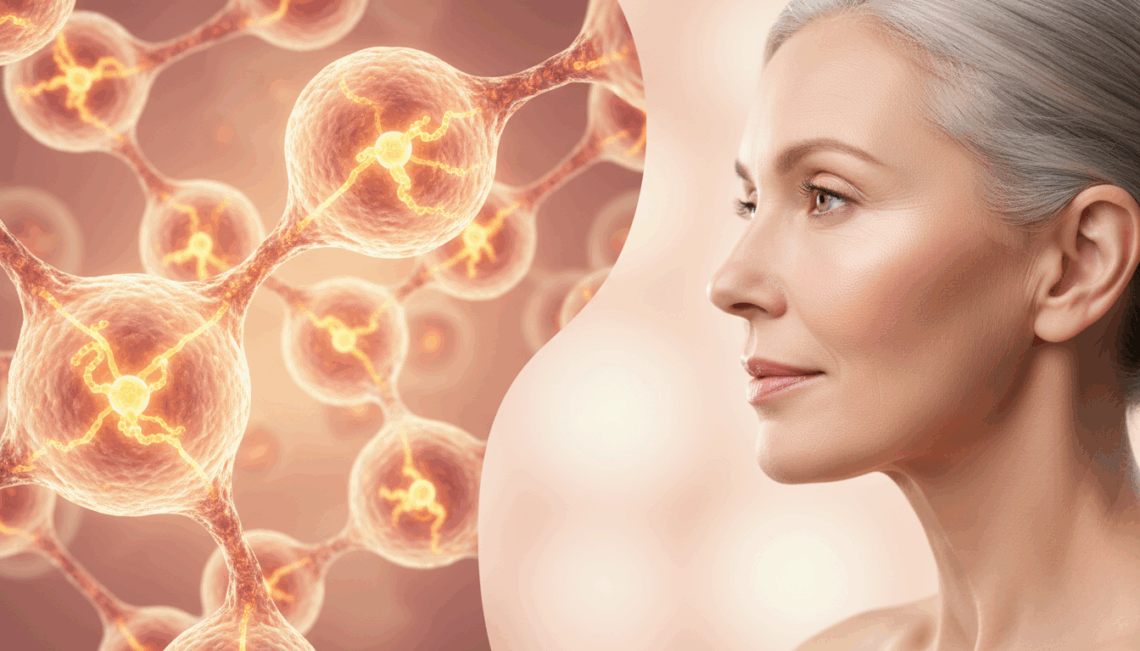
While managing the factors above is critical, new research is revealing a deeper, more fundamental cause behind skin aging. The problem isn’t just that the structural proteins are breaking down; it’s that the very “power plants” inside our skin cells are becoming less efficient. We’re talking about mitochondria.
Mitochondria are the energy generators within every cell in your body, including your skin cells (fibroblasts) that produce collagen and elastin. They provide the cellular energy (ATP) needed for all functions, from repair and regeneration to defense against environmental stressors. As we age, our mitochondrial function can decline. They can become damaged, less numerous, and less effective at producing energy. Scientists are now referring to this cellular-level decay as a potential root cause of visible aging.
When the mitochondria in your skin cells are running on low power, they can’t effectively produce the collagen and elastin needed to keep skin firm. It’s like asking a construction crew to build a skyscraper with only half the power they need; the work will be slow, and the structure will be weak. This is why some people find that even with a healthy lifestyle and traditional skincare, they still struggle with loose skin. They haven’t been addressing the issue at the core energy level.

Recognizing this connection between mitochondrial health and skin vitality is a game-changer. It shifts the focus from merely “fixing” the surface to rejuvenating the skin from its most fundamental level. Supporting your cellular energy production could be the missing piece in the puzzle of how to tighten loose skin on your face.
Proven Lifestyle Methods for How to Tighten Loose Skin on Your Face
A holistic approach is always the most effective. While advanced skincare can target specific issues, supporting your skin from the inside out through daily habits is non-negotiable for long-term success.
Nourish Your Skin from Within
Your diet plays a direct role in your skin’s health. Focus on incorporating foods rich in antioxidants, which help fight free radical damage.
- Vitamin C: Essential for collagen synthesis. Found in citrus fruits, bell peppers, strawberries, and broccoli.
- Healthy Fats: Omega-3 fatty acids, found in salmon, walnuts, and flaxseeds, help keep skin cell membranes strong and supple.
- Polyphenols: Found in green tea, berries, and dark chocolate, these compounds have powerful anti-inflammatory and antioxidant properties.
Stay Hydrated Consistently
Drinking enough water is fundamental. Proper hydration helps maintain your skin’s turgor, or its ability to bounce back. When you’re well-hydrated, your skin cells are plumper and the skin appears fuller and less saggy. Aim for at least 8 glasses of water a day, and more if you are active or in a hot climate.
The Power of Facial Massage and Exercise
Just like the muscles in your body, the muscles in your face can benefit from exercise. Regular facial exercises can help tone the underlying muscles, providing a firmer foundation for the skin on top. Additionally, daily facial massage—using your fingertips or a tool like a jade roller or gua sha—can help boost circulation. Increased blood flow brings more oxygen and nutrients to your skin cells, which supports their health and function.
Prioritize Sun Protection
This cannot be overstated. Applying a broad-spectrum sunscreen with an SPF of 30 or higher every single day is the single most effective thing you can do to prevent the breakdown of collagen and elastin. It’s a defensive strategy that protects your skin’s existing structure from further damage, allowing your reparative efforts to be much more effective.
Choosing Skincare That Truly Supports Your Skin
When looking for topical solutions, it’s easy to get overwhelmed by marketing claims. However, understanding the science can help you choose products that offer real benefits.
Key Ingredients to Look For
Certain ingredients are backed by decades of research for their ability to improve skin texture and firmness:
- Retinoids (like Retinol): A derivative of Vitamin A, retinoids are champions of skin cell turnover and have been shown to stimulate collagen production over time.
- Vitamin C Serums: A potent antioxidant that not only protects from free radical damage but is also a crucial cofactor in the collagen synthesis process.
- Peptides: These are short chains of amino acids that act as building blocks for proteins like collagen and elastin. Certain peptides can signal your skin to produce more of these essential proteins.
The Next Frontier: Targeting Cellular Energy
While the ingredients above are excellent, the most cutting-edge skincare science is now focused on supporting the skin at the mitochondrial level. As we discussed, if your cellular engines aren’t working properly, nothing else can function at its best. Formulations designed to protect and support mitochondrial health are emerging as a powerful new tool in the quest for firmer, more youthful-looking skin. These products aim to “recharge” your skin cells, providing them with the energy they need to repair damage and build new collagen effectively.
Combining a lifestyle that supports your skin from the inside with a skincare routine that addresses both the structural proteins and the underlying cellular energy is the most comprehensive strategy for tackling loose skin.
Your Path to Firmer, More Radiant Skin
The journey to tighter, firmer skin is not about finding a single “miracle cure.” It’s about a consistent, intelligent approach that addresses the issue from multiple angles. It begins with understanding that the loss of firmness is a complex process rooted in the breakdown of structural proteins and, more deeply, in the decline of cellular energy within your skin cells.
By adopting protective lifestyle habits, nourishing your body with skin-supporting nutrients, and choosing advanced skincare that works at a cellular level, you can create a powerful synergy. You can actively support your skin’s natural ability to be resilient, firm, and radiant. The goal is not to look like a different person, but to look like the best version of yourself—healthy, vibrant, and confident in the skin you’re in.