There’s a quiet anxiety that many people live with every day, a constant question mark hanging over their heads: “Will today be a good day?” This isn’t about mood or weather; it’s about their own body. Living with unpredictable bowel movements can feel like being a prisoner to your own digestive system. It dictates your social life, your work, and your peace of mind. You might find yourself mapping out bathrooms wherever you go or declining invitations because of the fear of a sudden, urgent flare-up. It’s a frustrating and often isolating experience.
If you’re reading this, you’ve likely tried the standard advice. You’ve increased your fiber, maybe to the point of uncomfortable bloating. You’ve experimented with probiotics, hoping to cultivate a healthier gut microbiome. You’ve cut out dairy, gluten, and other potential culprits. Yet, for many, the unpredictability remains. This is because sometimes, the issue isn’t just about what you’re putting in, but about how your body’s fundamental systems are functioning on a cellular level.
Navigating the Frustration of Common Solutions
The journey to find digestive peace can be a long and winding road. The wellness market is flooded with “solutions” that promise quick fixes. While things like fiber, hydration, and probiotics are essential components of gut health, they don’t always address the core of chronic digestive distress.
Why is this? Because these solutions often operate on the surface level. Fiber adds bulk, water keeps things moving, and probiotics introduce beneficial bacteria. But what if the problem lies deeper? What if the very lining of your gut, the barrier that’s supposed to be strong and resilient, is struggling to get the energy it needs to function properly? When the root cause is overlooked, these common remedies can feel like patching a leaky dam with a band-aid. They might offer temporary relief, but they don’t fix the underlying structural weakness.
The Hidden Engine of Your Gut: Understanding Mitochondria
To understand the root of the problem, we need to zoom in—way in. Inside almost every cell in your body, including the cells that make up your intestinal lining, are tiny powerhouses called mitochondria. Their primary job is to convert the food you eat and the air you breathe into cellular energy, known as ATP. This energy is what fuels every single bodily function, from thinking and moving to digesting and repairing.
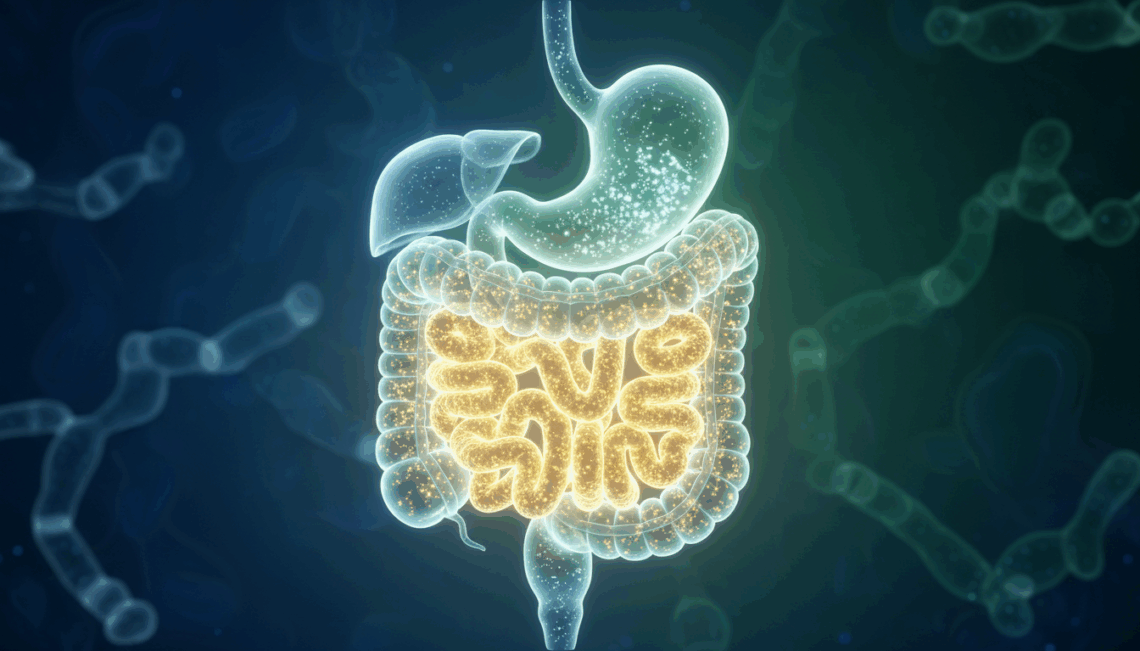
Think of the cells in your gut lining as a tightly woven fabric. This “fabric” is what keeps undigested food particles, toxins, and harmful bacteria safely inside your digestive tract, preventing them from leaking into your bloodstream. For these cells to maintain their tight junctions and constantly repair themselves (the gut lining replaces itself every few days!), they need a tremendous amount of energy. This is where the mitochondria come in. Healthy, efficient mitochondria provide the constant power supply your gut lining needs to stay strong and intact.
What Happens When Gut Mitochondria Weaken?
Due to factors like stress, poor diet, aging, and environmental toxins, our mitochondria can become damaged and less efficient. When the mitochondria in your gut cells start to falter, they can’t produce enough energy. This energy crisis has a direct impact on your digestive health.
- Weakened Gut Barrier: Without enough energy, the tight junctions between the cells of your intestinal lining can loosen. This leads to a condition commonly known as “leaky gut” or increased intestinal permeability.
- Inflammation and Sensitivity: When particles leak from the gut into the bloodstream, the immune system can see them as foreign invaders, triggering an inflammatory response. This chronic, low-grade inflammation can cause bloating, cramping, and food sensitivities.
- Digestive Chaos: The entire digestive process relies on energy. A gut that’s running on empty can’t coordinate muscle contractions properly, leading to the hallmark symptoms of unpredictable bowel movements—swinging from constipation to diarrhea with little rhyme or reason.
- Systemic Fatigue: Because the gut is so central to your overall health and nutrient absorption, a low-energy gut can contribute to system-wide fatigue and “brain fog.”
A Cellular Approach to Restoring Digestive Peace
When you understand that an energy deficit at the cellular level could be at the heart of your digestive woes, the path to feeling better becomes clearer. It’s not just about managing symptoms; it’s about nourishing your gut from the inside out and providing those cellular powerhouses with the specific nutrients they need to thrive.
This is where a targeted nutritional strategy can be a game-changer. Supporting your mitochondrial health involves more than just a balanced diet; it requires specific compounds that are known to fuel cellular energy production. One such key nutrient is Choline, which plays a critical role in maintaining the structure of cell membranes and supporting mitochondrial function. When combined with a synergistic blend of polyphenols and other supporting nutrients, it can help provide the building blocks your gut lining needs to repair itself and function optimally.
Mitolyn is a formula designed around this very principle. It focuses on delivering a potent “power-greens” blend specifically aimed at restoring mitochondrial function within the gut lining. By addressing the energy crisis at its source, it helps your body naturally rebuild a stronger gut barrier, calm inflammation, and ultimately, bring predictability and peace back to your digestive system.

Lifestyle Habits to Support a Predictable Gut
While targeted nutritional support can be incredibly effective, it works best as part of a holistic approach. The following lifestyle habits can help create an environment where your gut can heal and thrive.
Mindful Eating Practices
How you eat is just as important as what you eat. Digestion begins not in the stomach, but in the brain. When you’re stressed, your body is in “fight or flight” mode, which shuts down non-essential functions like digestion.
- Chew Thoroughly: Aim to chew each bite until it’s nearly liquid. This mechanically breaks down food and allows enzymes in your saliva to begin the digestive process, reducing the burden on your stomach and intestines.
- Eat in a Relaxed State: Avoid eating while driving, working, or arguing. Sit down, take a few deep breaths before you begin, and focus on the food in front of you. This activates the “rest and digest” nervous system response.
Smart Hydration
Water is crucial for every digestive process, from breaking down food to absorbing nutrients and expelling waste. Dehydration can lead to constipation and a sluggish system.
- Sip, Don’t Gulp: Sip water consistently throughout the day rather than chugging large amounts at once, which can overwhelm your system.
- Avoid Ice-Cold Drinks with Meals: Very cold beverages can cause the stomach to constrict, potentially hindering digestion. Opt for room temperature or warm water.
Gentle Movement
You don’t need to run a marathon to benefit your gut. Gentle, consistent movement can have a profound impact on digestive regularity.
- Post-Meal Walks: A short, 10-15 minute walk after meals can help stimulate peristalsis, the coordinated muscle contractions that move food through your digestive tract.
- Yoga and Stretching: Practices like yoga that involve gentle twists and core engagement can help massage the digestive organs and relieve bloating.
Key Nutrients for a Healthy Gut Lining
Beyond a specialized mitochondrial-support formula, ensuring your diet is rich in certain nutrients can provide the raw materials for gut repair. Focus on incorporating whole foods that contain:
- L-Glutamine: An amino acid that serves as a primary fuel source for the cells of the small intestine. It’s found in foods like bone broth, cabbage, fish, and spinach.
- Zinc: This mineral is vital for maintaining the strength of the gut barrier. Oysters, beef, pumpkin seeds, and lentils are excellent sources.
- Collagen: Provides the amino acids necessary to build and repair the connective tissue of the intestinal lining. Bone broth is the richest dietary source.
- Fermented Foods: Foods like sauerkraut, kimchi, and kefir (if you tolerate dairy) provide a natural source of beneficial bacteria that support a healthy gut ecosystem.
Conclusion: Taking Back Control of Your Life
Living with unpredictable bowel movements is more than a physical inconvenience; it’s a thief of joy, spontaneity, and confidence. The feeling of not being in control of your own body can be deeply disheartening. But understanding the potential root cause—an energy crisis in the very cells of your gut lining—is the first step toward reclaiming that control. By shifting your focus from merely managing symptoms to actively nourishing your cellular health, you can provide your body with the tools it needs to truly heal.
It’s about building a resilient, predictable, and peaceful digestive system from the ground up, so you can stop planning your life around the nearest bathroom and start living it to the fullest once again.
Disclaimer: The information provided in this article is for educational purposes only and is not intended as a substitute for professional medical advice, diagnosis, or treatment. Always seek the advice of your physician or other qualified health provider with any questions you may have regarding a medical condition. Never disregard professional medical advice or delay in seeking it because of something you have read here.