
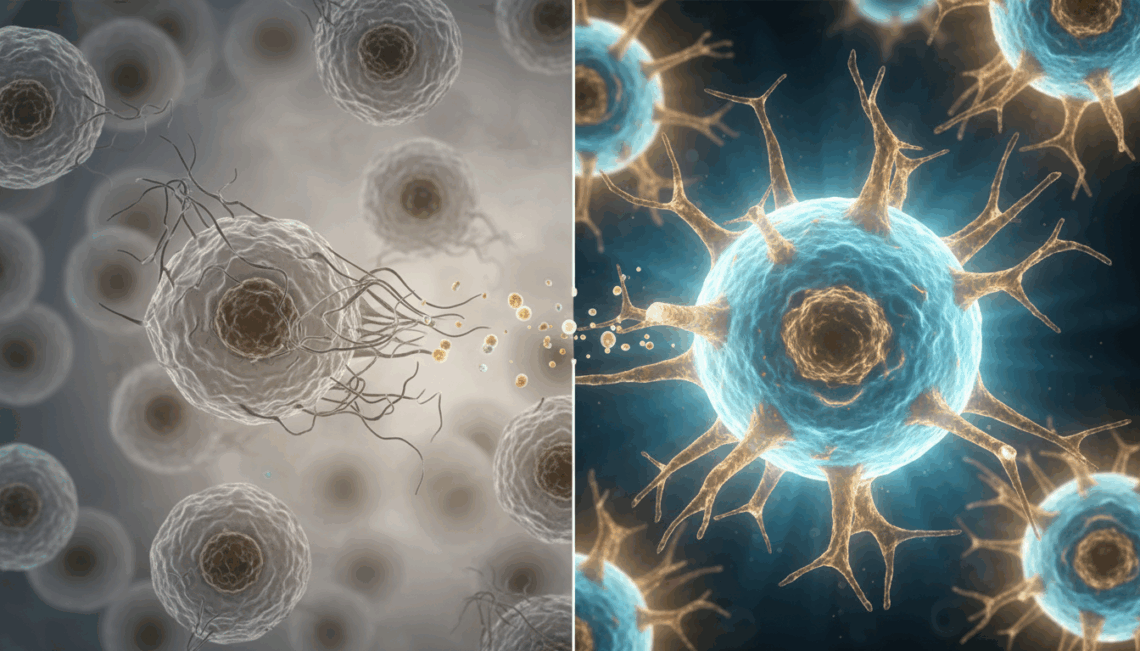
The Hidden Drain on Your Energy and Youth
Do you ever feel like you’re running on empty, no matter how much you sleep? Or perhaps you’ve noticed fine lines and a certain dullness in your skin that seems premature. Many of us attribute these feelings to stress or just “getting older,” but what if there’s a deeper, cellular reason? The conversation often misses a critical component: your mitochondria. Understanding the signs of mitochondrial dysfunction is the first step toward reclaiming the vibrant energy and health you deserve.
Mitochondria are the microscopic powerhouses within our cells, responsible for converting food and oxygen into the energy that fuels every single bodily function—from a heartbeat to a thought. When these cellular batteries start to weaken, the effects ripple throughout the entire body, leading to a cascade of symptoms that can be easily misinterpreted.
What Exactly Are Mitochondria?
Think of your body as a bustling city. The mitochondria are the thousands of power plants in every neighborhood (cell), working tirelessly to keep the lights on. They produce a molecule called adenosine triphosphate (ATP), which is the primary energy currency of the cell. Without sufficient ATP, the city’s operations slow down. Your brain can’t think as clearly, your skin loses its ability to repair itself, and your metabolism becomes sluggish.
Uncovering the 7 Key Signs of Mitochondrial Dysfunction
Mitochondrial health isn’t just about energy; it’s about the quality of your life. When these powerhouses falter, the signs can be subtle at first but become more pronounced over time. Here are some of the most common yet often overlooked indicators.
1. Persistent, Deep Fatigue
This isn’t the kind of tiredness that a good night’s sleep or a cup of coffee can fix. This is a profound, chronic fatigue that makes it difficult to get through the day. Because mitochondria produce the vast majority of your body’s energy, their decline directly translates to a systemic lack of fuel.
2. Premature Skin Aging
Your skin is one of the first places to show cellular distress. Mitochondrial dysfunction impairs the skin’s ability to regenerate and defend itself against environmental stressors. This can manifest as:
- An increase in fine lines and wrinkles
- Loss of skin elasticity and firmness
- A dull, lackluster complexion
- Slower healing from blemishes or cuts
3. Stubborn Weight Gain & Slow Metabolism
Are you struggling with weight that won’t budge, even with a healthy diet and exercise? Your mitochondria play a crucial role in metabolic rate. When they aren’t functioning optimally, your body becomes less efficient at burning calories for energy, instead storing them as fat, particularly around the midsection.
4. Brain Fog and Cognitive Decline
Your brain is an energy-hungry organ, consuming about 20% of your body’s total power. Weak mitochondria can lead to “brain fog,” characterized by difficulty concentrating, memory lapses, and a general feeling of mental sluggishness. These are clear signs of mitochondrial dysfunction impacting your cognitive performance.
5. Poor Exercise Performance and Recovery
If you find your stamina decreasing or it takes you much longer to recover from workouts, your mitochondria could be the culprit. Muscles are densely packed with these powerhouses. When they are impaired, muscles can’t produce the energy needed for sustained effort and repair, leading to weakness and prolonged soreness.
Lifestyle Strategies to Support Your Cellular Health
The good news is that you are not powerless. You can support your mitochondrial health through targeted lifestyle choices. Regular exercise, particularly a mix of endurance and high-intensity interval training (HIIT), can stimulate the production of new mitochondria. A diet rich in antioxidants—found in colorful fruits, vegetables, and leafy greens—can help protect them from damage.
Prioritizing sleep is also non-negotiable, as this is when your cells perform most of their repair and regeneration. However, sometimes lifestyle changes alone aren’t enough to combat years of cellular stress.

The Role of Advanced Polyphenols in Cellular Rejuvenation
Modern science has shed light on specific nutrients that can provide powerful support for mitochondrial function. Polyphenols, a group of protective compounds found in plants, are particularly promising. One of the most potent polyphenols is oleuropein, found abundantly in olives and olive leaves.
Research suggests that certain high-potency olive extracts can help the body clear out old, dysfunctional cells (often called “zombie cells”) and stimulate a process called mitochondrial biogenesis—the creation of new, healthy mitochondria. This targeted approach helps address the root cause of cellular decline, offering a way to complement the benefits of a healthy lifestyle.
By providing the body with a concentrated source of these powerful compounds, you can help protect your cellular powerhouses from damage and support their ability to produce the energy you need to thrive.
Conclusion: Take Control of Your Cellular Energy
Recognizing the signs of mitochondrial dysfunction is a crucial paradigm shift in how we view health and aging. It moves the focus from surface-level symptoms to the foundational, cellular processes that dictate how we look, feel, and perform. By understanding this connection, you can make more informed and empowered decisions about your health. Supporting your mitochondria isn’t just about feeling less tired; it’s about fostering a body that is resilient, vibrant, and youthful from the inside out.
Important Disclaimer
The information provided in this article is for educational purposes only and should not be considered medical advice. The content is not intended to diagnose, treat, cure, or prevent any disease. Always consult with a qualified healthcare professional before making any changes to your diet, exercise routine, or supplement regimen. Statements regarding dietary supplements have not been evaluated by the Food and Drug Administration (FDA).