Understanding and Addressing Liver Spots on Your Skin
It can be disheartening to look in the mirror and see new dark spots appearing on your hands, face, or chest. Often called “liver spots” or “age spots,” these marks can make you feel older than you are. You might have tried various creams and serums with little to no success, leaving you wondering if there’s a real solution. If you’re searching for how to get rid of liver spots, you’re not alone, and understanding the root cause is the first step toward finding an effective approach.
This guide will take a deeper look into what these spots are, why they form, and explore a modern approach to addressing them that goes beyond surface-level treatments. We’ll focus on the science behind skin health to help you make informed decisions for a clearer, more radiant complexion.
What Exactly Are Liver Spots?
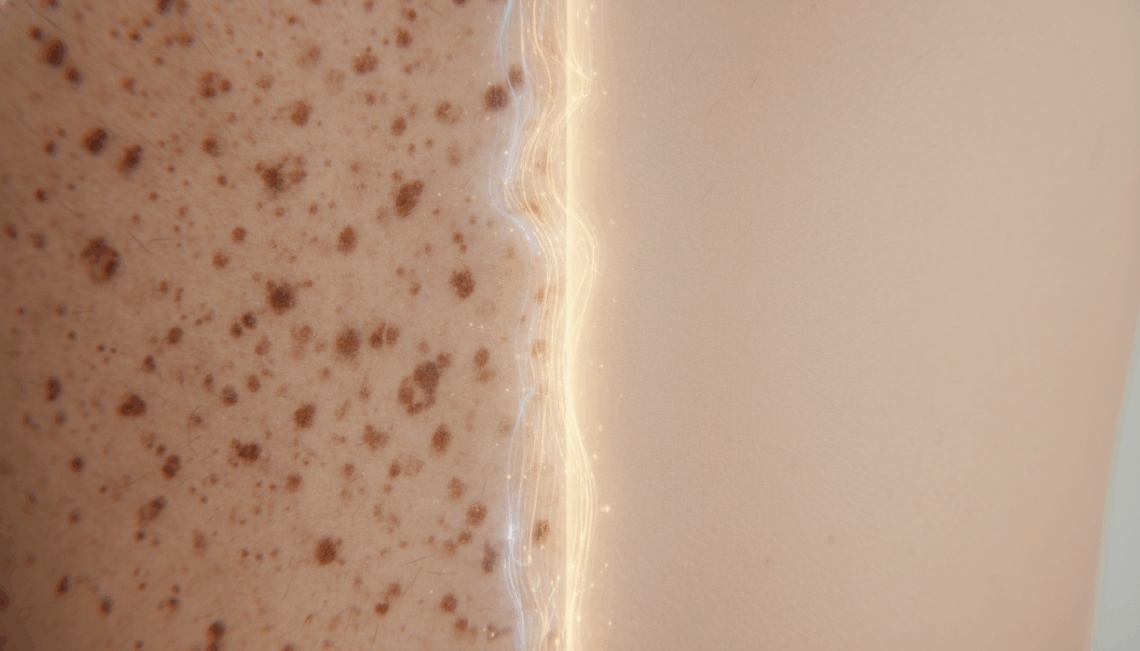
First, let’s clear up a common misconception. Despite their name, liver spots have nothing to do with your liver’s health. The medical term for them is solar lentigines. They are small, flat, darkened patches of skin that typically appear on areas most exposed to the sun, such as the face, hands, shoulders, and arms. While they are most common in adults over 50, they can appear on younger individuals who have had significant sun exposure.
These spots are the result of an overproduction of melanin, the natural pigment that gives skin its color. When skin is exposed to ultraviolet (UV) light, it accelerates the production of melanin, creating a tan that helps protect deeper layers of skin from sun damage. After years of exposure, this melanin can clump together or be produced in high concentrations, forming the dark spots we recognize as liver spots.
What Are the Primary Causes of Liver Spots?
Understanding the cause is crucial for both treatment and prevention. The factors behind their appearance are straightforward but powerful.
- Sun Exposure: This is the single biggest cause. The UV rays from the sun (and tanning beds) are directly responsible for activating the melanin-producing cells (melanocytes). Every time you’re in the sun without protection, you contribute to this cumulative damage.
- Aging: As we age, our skin’s natural regenerative processes slow down. The body becomes less efficient at repairing cellular damage, and melanin regulation can become less controlled, making it easier for these pigmented spots to form and become permanent.
- Genetics: Some people are genetically more predisposed to developing freckles and liver spots than others, particularly those with fair skin.
Why Are Liver Spots So Difficult to Address?
Many people become frustrated when over-the-counter creams don’t seem to work. The reason is that liver spots are not just a surface-level issue. The excess pigment is located in the epidermis, the top layer of skin. While some treatments can lighten the surface, the underlying cells continue to overproduce melanin, causing the spots to remain or return.
True, long-lasting improvement requires an approach that supports the skin at a deeper, cellular level. It’s about helping the skin cells function more efficiently and manage pigment production properly. This is where conventional solutions often fall short, as they fail to address the core issue of cellular health and energy.

A Modern Approach: Targeting Skin Health at the Cellular Level
Recent dermatological research has shifted focus from merely treating symptoms to enhancing the fundamental health of skin cells. A key area of this research is the role of mitochondria. You might remember them from biology class as the “powerhouses” of the cell, and that’s exactly what they are for your skin, too.
The Role of Mitochondria in Skin Aging
Mitochondria are responsible for generating the energy (ATP) that skin cells need to perform all their functions, including self-repair, regeneration, and collagen production. As we age and accumulate sun damage, mitochondrial function can decline. This energy deficit means cells can’t repair damage effectively, leading to visible signs of aging like wrinkles, sagging, and, importantly, irregular pigmentation like liver spots.
By supporting mitochondrial health, you can theoretically provide your skin cells with the energy they need to function optimally. This approach aims to restore the skin’s natural ability to regulate itself, promoting a more even and youthful appearance from the inside out.
Introducing Mitolyn: A Solution Focused on Cellular Restoration
This is where a product like Mitolyn comes in. It is formulated based on the principle of supporting cellular health to address the root causes of skin aging. Rather than just bleaching the skin’s surface, its ingredients are chosen to help nourish and energize skin cells at a deeper level.
By focusing on the bio-energetic needs of the skin, Mitolyn aims to provide a supportive environment for skin cells. This allows them to better manage their functions, including the regulation of melanin. The goal is not a temporary fix but to promote a healthier, more balanced complexion, which in turn can improve the appearance of stubborn dark spots.
Practical Tips for Preventing Future Liver Spots
While a targeted solution can help address existing spots, prevention is your best defense against new ones forming. The following habits are non-negotiable for long-term skin health.
- Wear Broad-Spectrum Sunscreen Daily: This is the most critical step. Choose an SPF of 30 or higher and apply it every single day, even when it’s cloudy. Reapply every two hours when outdoors.
- Cover Up: Wear wide-brimmed hats, sunglasses, and long-sleeved clothing when you know you’ll be in the sun for extended periods.
- Avoid Peak Sun Hours: The sun’s rays are strongest between 10 a.m. and 4 p.m. Try to seek shade during these times.
- Incorporate Antioxidants: Both in your diet and your skincare. Antioxidants help fight free radical damage from UV exposure. Look for serums containing Vitamin C and consume plenty of colorful fruits and vegetables.
Conclusion: A Path to Clearer Skin
Figuring out how to get rid of liver spots requires moving beyond temporary fixes and focusing on the underlying health of your skin. These spots are a direct result of sun damage and the skin’s declining ability to repair itself with age. By supporting cellular energy and function with a targeted approach, you can help your skin regain a more balanced, even-toned appearance. Combined with diligent sun protection, this strategy offers a comprehensive and effective path toward the clearer, more radiant skin you deserve.
If you’re ready to move beyond frustrating surface-level treatments and address your skin’s health from a deeper level, exploring a solution designed for cellular support may be the next logical step.
Frequently Asked Questions (FAQ)
Are liver spots dangerous?
No, typical liver spots (solar lentigines) are harmless and do not require medical treatment. However, it is crucial to monitor your skin for any changes. If a spot changes in size, shape, or color, or if it becomes itchy or bleeds, you should consult a dermatologist immediately to rule out skin cancer.
How long does it take to see results?
Results can vary significantly depending on the individual, the severity of the spots, and the chosen treatment method. With any skincare routine, consistency is key. It often takes several weeks or even months to see noticeable improvement as the skin needs time to go through its natural regeneration cycles.
Can I use natural remedies like lemon juice or apple cider vinegar?
While some people try these remedies, they are not generally recommended by dermatologists. They can be highly acidic and may cause skin irritation, dryness, or even increased sensitivity to the sun, potentially worsening the problem. It is always safer to use products specifically formulated and tested for skincare.