Understanding the Root of Your Skin Frustrations
Does your skin feel constantly tight, dry, or irritated, no matter how much moisturizer you apply? Do you notice more redness, sensitivity, and a lackluster appearance that wasn’t there before? If you’re nodding along, you’re not alone. Many of us blame these issues on aging or using the wrong products, but the real culprit is often something deeper: a compromised skin barrier. This guide will explain everything you need to know about how to fix a damaged skin barrier, moving beyond temporary fixes to achieve truly healthy and resilient skin.
Think of your skin barrier as a diligent security guard for your body. This outermost layer of your skin, known as the stratum corneum, has two critical jobs: keeping good things (like moisture) in and bad things (like pollutants and irritants) out. When it’s healthy, it’s strong, smooth, and effective. But when it becomes damaged, it’s like a security guard who has fallen asleep on the job, leaving the gates wide open for problems.
What Is the Skin Barrier and Why Does It Matter?
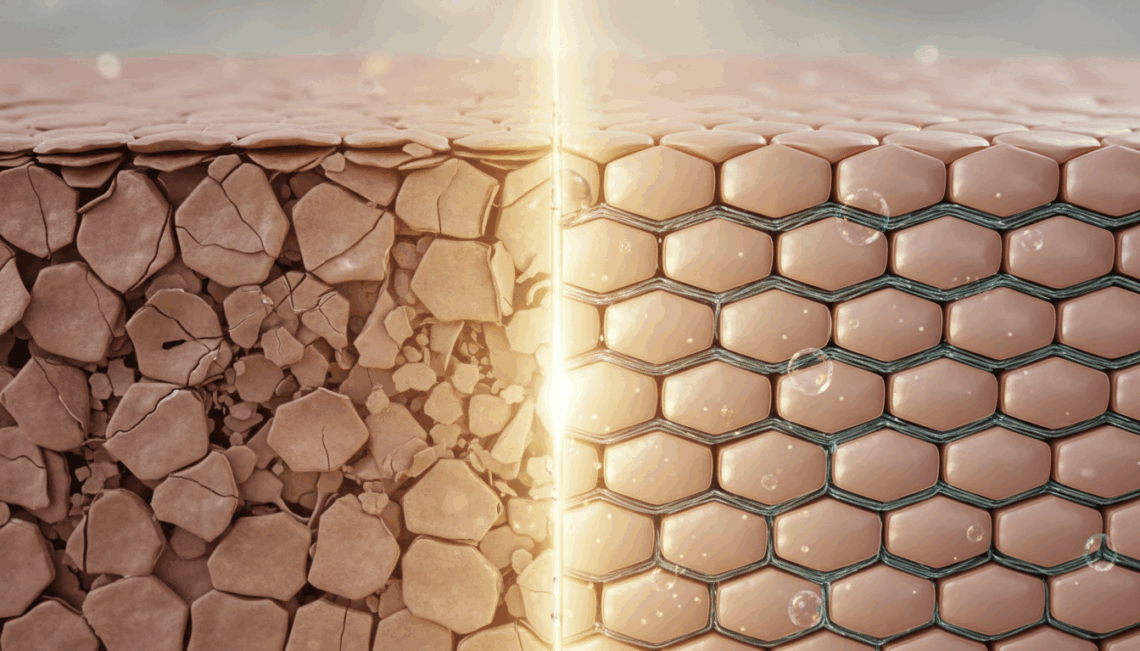
The skin barrier is often described using a “brick and mortar” analogy. The “bricks” are tough skin cells called corneocytes, and the “mortar” is a mix of lipids—like ceramides, cholesterol, and fatty acids—that holds everything together. This structure is essential for your overall health and appearance.
A healthy barrier:
- Locks in Hydration: It prevents transepidermal water loss (TEWL), the process where water evaporates from your skin into the air. This keeps your skin hydrated, plump, and supple.
- Defends Against Threats: It protects you from environmental aggressors like UV radiation, pollution, and harmful bacteria that can cause inflammation and premature aging.
- Maintains Skin Health: By keeping your skin balanced and protected, it reduces the likelihood of sensitivity, redness, and irritation.
When this mortar-like lipid layer breaks down, it creates tiny, invisible cracks in your skin’s defense system. This is what we refer to as a damaged or “leaky” skin barrier.
Top 5 Signs Your Skin Barrier Is Damaged
How can you tell if your skin’s defenses are down? A damaged barrier sends out clear distress signals. If you experience several of the following, it’s a strong indication that your barrier needs support.
1. Increased Dryness and Dehydration
Your skin feels constantly thirsty, flaky, or tight, even after applying moisturizer. This is a classic sign that your barrier can no longer hold onto moisture effectively.
2. Heightened Sensitivity and Redness
Products that never bothered you before suddenly cause stinging or burning. You might also notice persistent redness or blotchiness as irritants more easily penetrate the skin.
3. Acne and Breakouts
A weakened barrier can allow acne-causing bacteria to invade more easily. Additionally, the inflammation from a damaged barrier can trigger or worsen breakouts.
4. Dull, Lackluster Appearance
Healthy, hydrated skin reflects light, giving you a natural glow. When the barrier is damaged and dehydrated, the skin surface becomes rough and uneven, leading to a dull, tired look.
5. Slow Healing
If blemishes or marks seem to stick around forever, it could be a sign that your skin’s natural repair processes are impaired due to a weakened barrier.
Common Causes of a Damaged Skin Barrier
Understanding what causes the damage is the first step in learning how to fix a damaged skin barrier. It’s often a combination of factors that strip away the essential lipids holding your skin cells together.
- Over-Exfoliating: Using harsh physical scrubs or too many chemical exfoliants (like AHAs and BHAs) can strip away the protective lipid layer.
- Harsh Cleansers: Soaps and cleansers with high pH levels or sulfates can be too aggressive, disrupting the skin’s natural balance.
- Environmental Factors: Sun exposure, wind, low humidity, and pollution all put stress on your skin’s defenses.
- Aging: As we age, our bodies naturally produce fewer ceramides and other lipids, making the barrier inherently weaker and more susceptible to damage.
- Stress and Lack of Sleep: High cortisol levels (the stress hormone) can impair barrier function and slow down its ability to repair itself.

How to Fix a Damaged Skin Barrier: Foundational Steps
The good news is that the skin barrier is remarkably resilient and can be repaired with the right care. The key is to be gentle and focus on replenishing what has been lost. It’s about working *with* your skin, not against it.
1. Simplify Your Routine
First, strip your routine back to the basics. For a few weeks, pause the use of potent active ingredients like retinoids, vitamin C, and exfoliating acids. Focus on a simple, three-step routine: gentle cleanser, hydrating moisturizer, and sunscreen.
2. Choose a Gentle, pH-Balanced Cleanser
Swap out any foaming or stripping cleansers for a milky, creamy, or hydrating gel formula. Look for cleansers that are labeled “gentle” and “pH-balanced” to avoid disrupting your skin’s natural state.
3. Focus on Barrier-Supporting Ingredients
Your moisturizer should be your primary tool for repair. Look for products rich in ingredients that mimic the natural components of your skin barrier:
- Ceramides: These are the most important lipids for barrier function. Adding them back topically helps to patch up the “mortar.”
- Hyaluronic Acid: A powerful humectant that draws moisture into the skin, helping to rehydrate it from within.
- Niacinamide: This versatile B vitamin is proven to boost ceramide production and reduce inflammation.
- Glycerin and Squalane: Excellent emollients that soften the skin and help lock in moisture.
4. Never Skip Sunscreen
UV radiation is one of the biggest enemies of a healthy skin barrier. A broad-spectrum sunscreen with at least SPF 30 is non-negotiable, even on cloudy days. Mineral sunscreens containing zinc oxide or titanium dioxide can be gentler for sensitive, compromised skin.
Beyond the Basics: Targeting the Root Cause of Barrier Decline
Following a gentle skincare routine is crucial, but sometimes it isn’t enough, especially when the damage is linked to the natural aging process. As we get older, the decline in barrier function isn’t just on the surface—it starts at a much deeper, cellular level. The energy-producing centers of our cells, the mitochondria, become less efficient. This cellular slowdown means the skin can’t produce the lipids, collagen, and elastin it needs to keep the barrier strong and resilient.
This is the concept of “leaky skin”—a condition where the cellular structure itself loses integrity, leading to chronic moisture loss, sagging, and wrinkles that topical creams alone struggle to address. To truly restore the skin’s youthful function, it’s essential to support its health from the inside out, targeting the very source of cellular decline.
Introducing a Specialized Approach to Cellular Skin Repair
For those looking for a more advanced solution, certain formulations are designed specifically to address this age-related cellular breakdown. Instead of just adding moisture on top, they work to help your skin rebuild its own barrier from within. One of the most promising approaches in modern skincare is the use of solutions that directly target this “leaky skin” phenomenon.
Mitolyn is a product formulated around this very principle. It’s designed to provide the skin with the specific nutrients needed to help restore cellular integrity and function. By addressing the root cause—the decline in cellular energy and structure—it helps the skin regain its natural ability to maintain a strong, sealed barrier. This approach doesn’t just patch up the cracks; it helps rebuild the entire foundation, leading to skin that is not only more hydrated and less sensitive but also visibly firmer and more youthful.
If you feel like you’ve hit a wall with traditional methods, exploring a solution that works at the cellular level could be the missing piece in your journey to finally figuring out how to fix a damaged skin barrier for the long term. As with any new product, especially if you have sensitive skin, it is always wise to perform a patch test or consult with a dermatologist.
In conclusion, repairing your skin barrier is a journey of patience and consistency. By removing harsh elements, replenishing your skin with supportive ingredients, and protecting it from daily aggressors, you can restore its strength and resilience. For those facing age-related challenges, considering an advanced solution that targets the cellular root of the problem can provide the comprehensive support your skin needs to truly thrive.