The Unseen Connection: How Your Gut Health Dictates Your Overall Well-being
Do you ever feel like you’re doing everything right—eating well, trying to get enough sleep—but still struggle with persistent bloating, unpredictable digestion, brain fog, and skin issues? It’s a frustrating cycle that can leave you feeling powerless. What many don’t realize is that these seemingly disconnected problems can often be traced back to a single, underlying issue within your digestive system. Understanding the most common leaky gut symptoms is the first step toward reclaiming your health and vitality.
This isn’t about a fad diet or a quick fix. It’s about getting to the root cause of why you feel “off.” We’re going to explore the science behind intestinal permeability, or “leaky gut,” in a clear and simple way. By the end of this article, you’ll have a much deeper understanding of what might be happening inside your body and learn about actionable steps, including targeted nutritional support, to help you restore balance from within.
What Exactly Is Leaky Gut Syndrome?
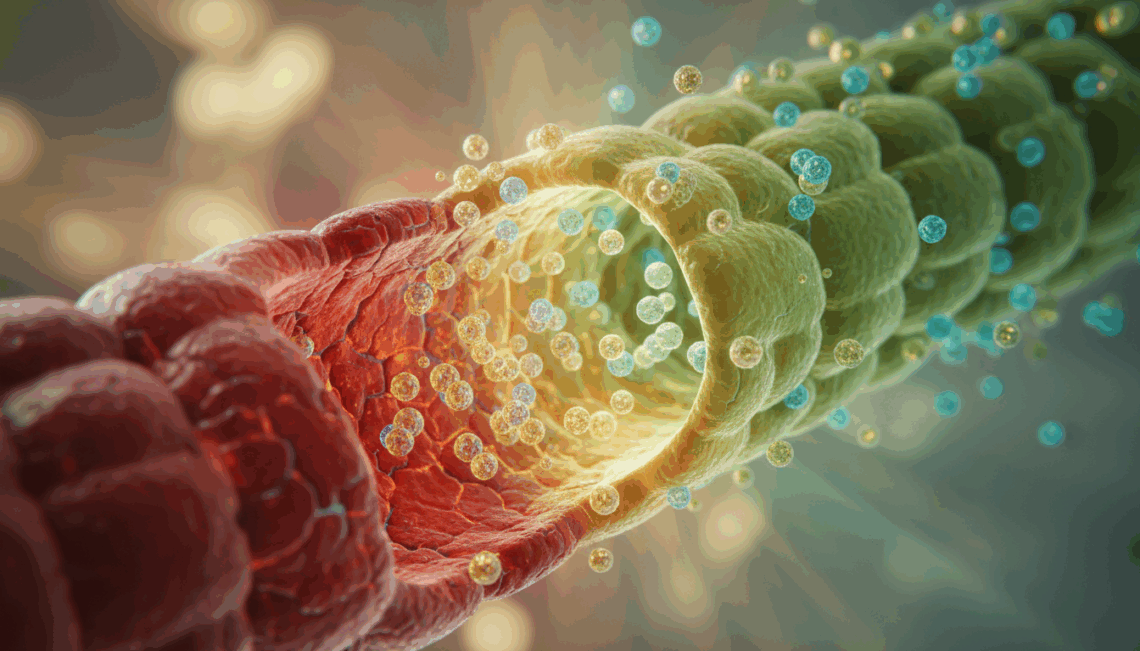
Imagine your digestive tract as a tightly controlled barrier. The walls of your intestines are lined with a single layer of cells held together by “tight junctions.” Their job is to act as gatekeepers, allowing vital nutrients from your food to pass into your bloodstream while blocking harmful substances like toxins, undigested food particles, and harmful bacteria.
Leaky Gut Syndrome, or increased intestinal permeability, occurs when these tight junctions loosen. The barrier becomes compromised, allowing those unwanted substances to “leak” from your intestines into your bloodstream. When this happens, your immune system identifies these invaders as foreign threats and launches an inflammatory response. This chronic, low-grade inflammation can manifest in numerous ways throughout your body, leading to the wide range of symptoms many people experience daily.
It’s More Than Just a Stomach Ache
It’s crucial to understand that while the problem originates in the gut, its effects are systemic. The chronic inflammation triggered by a leaky gut can place a significant strain on your entire body, contributing to feelings of fatigue, skin problems, and even mood imbalances. This is why simply treating the individual symptoms often fails to provide lasting relief; the underlying issue in the gut remains unaddressed.
The Most Common Leaky Gut Symptoms You Shouldn’t Ignore
Because a leaky gut can trigger a body-wide inflammatory response, the symptoms can be diverse and sometimes confusing. Here are some of the most frequently reported signs that your gut may need support.
1. Chronic Digestive Distress
This is often the most obvious sign. If your gut barrier isn’t functioning correctly, it directly impacts digestion. Common symptoms include:
- Persistent Bloating: Feeling puffy and full, especially after meals, regardless of what you eat.
- Excessive Gas: Uncomfortable and often embarrassing gas that seems constant.
- Indigestion and Food Sensitivities: You might notice that you react negatively to foods you previously ate without issue. This happens because undigested particles entering the bloodstream can trigger immune responses.
2. Unexplained Skin Conditions
Your skin is often a mirror of your internal health. The inflammation that starts in your gut can easily show up on your skin. Issues like acne, eczema, rosacea, or psoriasis can be linked to intestinal permeability. The body tries to expel toxins through the skin, leading to these frustrating and persistent conditions.
3. Persistent Fatigue and Brain Fog
Do you feel tired all the time, even after a full night’s sleep? Or struggle with a “foggy” feeling that makes it hard to concentrate? This could be your gut. The chronic inflammation from a leaky gut requires a massive amount of energy from your body, leaving you feeling drained. Furthermore, inflammatory molecules can cross the blood-brain barrier, disrupting cognitive function and leading to that feeling of mental cloudiness.
What Causes the Gut Lining to Weaken?
Several factors in modern life can contribute to the loosening of those critical tight junctions in your gut lining. Recognizing them is key to creating a strategy for healing.
- Poor Diet: A diet high in processed foods, sugar, and unhealthy fats can promote the growth of harmful bacteria, leading to inflammation that damages the gut lining.
- Chronic Stress: Prolonged stress isn’t just in your head; it has a profound physical effect. It can weaken your gut’s immune defenses and contribute to inflammation, making the barrier more permeable.
- Environmental Toxins: We are exposed to toxins daily, from pesticides on food to chemicals in household products. Over time, this toxic load can irritate and damage the delicate gut lining.
- Imbalance in Gut Microbiome: An overgrowth of “bad” bacteria and a lack of beneficial bacteria (dysbiosis) can directly contribute to the breakdown of the intestinal barrier.
The Difference Between Probiotics, Prebiotics, and Postbiotics
You’ve likely heard of probiotics and prebiotics, but the term “postbiotics” is gaining attention for its powerful, direct impact on gut health. Let’s quickly clarify the roles they play.
- Prebiotics: These are types of fiber that your body can’t digest. They act as food for the beneficial bacteria in your gut, helping them thrive. Think of them as fertilizer for your gut garden.
- Probiotics: These are the live beneficial bacteria themselves. You find them in fermented foods like yogurt and kefir, or in supplements. They help populate your gut with good microbes.
- Postbiotics: This is where it gets interesting. Postbiotics are the beneficial compounds that are produced by probiotics when they feed on prebiotics. These compounds, such as butyrate, are directly responsible for many of the health benefits we associate with a healthy gut. They provide energy for the cells of your gut wall and help maintain those tight junctions.
While prebiotics and probiotics are important, they rely on having the right internal environment to work. Postbiotics offer a more direct approach by delivering the “finished product” your gut needs to start the healing process.
A Targeted Approach: The Role of Postbiotics like Tributyrin
One of the most crucial postbiotics for gut health is butyrate. It is the primary fuel source for the cells that line your colon. It helps to strengthen the gut barrier, reduce inflammation, and support a healthy microbiome. However, getting enough butyrate can be challenging.
This is where a compound called Tributyrin comes in. It’s a highly efficient and bioavailable form of butyrate that is designed to travel through the stomach and small intestine to be delivered directly to the colon, where it’s needed most. By providing this direct fuel source, Tributyrin can help nourish and repair the gut lining, effectively addressing the root cause of leaky gut.
Introducing PrimeBiome: A Specialized Postbiotic Formula
Understanding this science is why targeted formulas have been developed. PrimeBiome is a supplement designed around this very principle. It utilizes Tributyrin as its core ingredient to deliver a concentrated dose of gut-healing postbiotics directly to your colon. It’s a 3-in-1 formula designed not just to mask symptoms, but to provide the building blocks your body needs to fortify the gut wall, rebalance your microbiome, and reduce the inflammation that causes so many widespread issues.
By focusing on a postbiotic approach, PrimeBiome supports the body’s natural healing processes, helping to seal the “leaks” that lead to bloating, fatigue, and skin problems. It represents a modern, science-backed approach to gut health that goes beyond generic probiotics.
Your Path to a Healthier Gut Starts Now
Recognizing the leaky gut symptoms you’ve been experiencing is a powerful moment. It means you’re no longer guessing; you’re identifying a potential root cause. Restoring your gut health is a journey that involves a holistic approach, including a balanced diet, stress management, and targeted nutritional support. By addressing the health of your intestinal barrier, you can finally begin to find relief from the persistent issues that have been holding you back, allowing you to feel more energized, clear-headed, and comfortable in your own skin.
As always, it’s wise to consult with a healthcare professional before starting any new supplement regimen to ensure it’s the right choice for your individual health needs.
Frequently Asked Questions (FAQ)
1. How long does it take to see improvements in leaky gut symptoms?
The timeline for healing the gut varies greatly from person to person. It depends on the severity of the intestinal permeability, diet, stress levels, and overall health. Some people may notice improvements in a few weeks, while for others, it might take several months of consistent effort and targeted supplementation.
2. Can I get enough butyrate from food alone?
Butyrate is produced when gut bacteria ferment dietary fiber. While a high-fiber diet is essential for this process, it can be difficult for those with a compromised gut to produce an optimal amount. That’s why direct supplementation with a source like Tributyrin can be a more effective strategy for repairing the gut lining.
3. Is Leaky Gut Syndrome a recognized medical diagnosis?
The term “Leaky Gut Syndrome” is widely used in the functional and integrative health communities. While the medical community is still debating the terminology, the underlying scientific concept of “increased intestinal permeability” is well-researched and acknowledged in scientific literature as being associated with various health conditions.