
The Unseen Connection: How Gut Health and Skin Aging Are Linked
You follow a meticulous skincare routine. You cleanse, tone, moisturize, and apply expensive serums packed with promising ingredients. Yet, despite your best efforts, you still struggle with persistent issues like fine lines, dullness, and a loss of that youthful elasticity. It’s a frustrating cycle that leaves many wondering: what am I missing? The answer might not be in another bottle on your bathroom shelf, but deep within your body. The crucial link between gut health and skin aging is emerging as one of the most significant frontiers in dermatology and wellness, revealing that the secret to radiant skin often starts from the inside out.
For decades, we’ve been conditioned to treat skin problems topically. While quality skincare is important, it often only addresses the symptoms, not the root cause. If your internal systems, particularly your digestive system, are out of balance, your skin is often the first place it shows. This intricate communication network is known as the gut-skin axis, and understanding it can fundamentally change your approach to skincare forever.
What Exactly Is the Gut-Skin Axis?
The gut-skin axis is a scientifically recognized concept that describes the constant two-way communication between your gut microbiome and your skin. Your gut is home to trillions of microorganisms, including bacteria, viruses, and fungi, collectively known as the microbiome. A healthy, diverse microbiome is essential for numerous bodily functions, including digestion, immune response, and even mood regulation. When this delicate ecosystem is balanced, it promotes overall health. When it’s imbalanced—a state called dysbiosis—it can trigger a cascade of problems that manifest directly on your skin.
Think of your gut as the central command center for your body’s inflammatory response. The microorganisms in your gut help regulate what gets absorbed into your bloodstream. When the gut lining is strong and healthy, it acts as a barrier, allowing nutrients in while keeping harmful toxins and pathogens out. However, when the microbiome is disrupted, this barrier can become compromised, leading to systemic inflammation that directly impacts skin health, accelerating the aging process.
How Poor Gut Health Accelerates Skin Aging
An unhealthy gut doesn’t just cause digestive discomfort; it actively works against your anti-aging goals. Several key mechanisms explain how dysbiosis can fast-track the appearance of wrinkles, spots, and sagging skin.
1. “Leaky Gut” and Systemic Inflammation
One of the most significant issues stemming from an imbalanced gut is increased intestinal permeability, commonly known as “leaky gut.” In this condition, the junctions between the cells lining your intestines loosen. This allows undigested food particles, toxins, and bacteria to “leak” into your bloodstream, where they don’t belong. Your immune system identifies these as foreign invaders and launches a full-blown inflammatory attack. This chronic, low-grade inflammation is a major driver of aging throughout the body, a phenomenon sometimes called “inflammaging.” On the skin, this can lead to the breakdown of collagen and elastin—the proteins that keep your skin firm and youthful—resulting in premature wrinkles and sagging.
2. Impaired Nutrient Absorption
Your skin requires a steady supply of vitamins, minerals, and antioxidants to repair itself and fend off environmental damage. A healthy gut is essential for properly breaking down food and absorbing these vital nutrients. When your gut microbiome is unhealthy, your body’s ability to absorb skin-loving nutrients like Vitamin C (essential for collagen production), zinc, and omega-3 fatty acids is severely compromised. No matter how healthy your diet is, if your gut can’t absorb the nutrients, your skin will be starved of the building blocks it needs to stay vibrant.
3. Oxidative Stress
Oxidative stress, caused by an imbalance between free radicals and antioxidants, is a primary cause of cellular damage and aging. A healthy gut microbiome plays a role in producing antioxidants and regulating oxidative stress levels in the body. An unhealthy gut, on the other hand, can contribute to an increase in free radical production, overwhelming your body’s natural defenses and leading to damaged skin cells, fine lines, and hyperpigmentation.
Is Your Gut Affecting Your Skin? Key Signs to Watch For
While digestive issues like bloating, gas, or irregular bowel movements are obvious signs of gut trouble, your skin often provides more subtle clues. If you experience any of the following, it might be time to look at your gut health:
- Persistent Dryness and Dullness: Skin that lacks radiance and moisture despite heavy creams could be a sign of poor nutrient absorption.
- Premature Fine Lines and Wrinkles: If you’re noticing accelerated signs of aging, chronic inflammation from your gut could be breaking down your skin’s structural proteins.
- Redness and Rosacea: Conditions like rosacea are strongly linked to gut inflammation and an imbalance of gut bacteria.
- Hyperpigmentation and Dark Spots: Oxidative stress and inflammation can trigger an overproduction of melanin, leading to uneven skin tone.
A Proactive Approach: How to Improve Gut Health for Youthful Skin
Nourishing your gut is one of the most effective long-term strategies for achieving healthy, youthful skin. The good news is that you can make significant improvements through diet, lifestyle, and targeted supplementation.
Diet and Nutrition
Focus on a whole-foods diet rich in fiber, which feeds beneficial gut bacteria. Incorporate probiotic-rich fermented foods like yogurt, kefir, kimchi, and sauerkraut. Equally important are prebiotic foods—like garlic, onions, and bananas—which act as food for the good bacteria. Reducing your intake of processed foods, sugar, and artificial sweeteners is also crucial, as these can feed harmful bacteria and promote dysbiosis.
Lifestyle Adjustments
Chronic stress is a major enemy of gut health. It can disrupt the microbiome and increase gut permeability. Incorporating stress-management techniques like meditation, deep breathing, or yoga can have a profound impact. Prioritizing 7-9 hours of quality sleep per night is also non-negotiable, as this is when your body, including your gut lining, performs most of its repair work.
The Power of Strategic Supplementation
While diet and lifestyle form the foundation, rebuilding a healthy gut can be a slow process. This is where strategic supplementation can play a transformative role. A high-quality, targeted probiotic can reintroduce specific strains of beneficial bacteria known to support the gut-skin axis. It’s a way to ensure your gut is receiving the precise tools it needs to reduce inflammation and promote skin health from within.
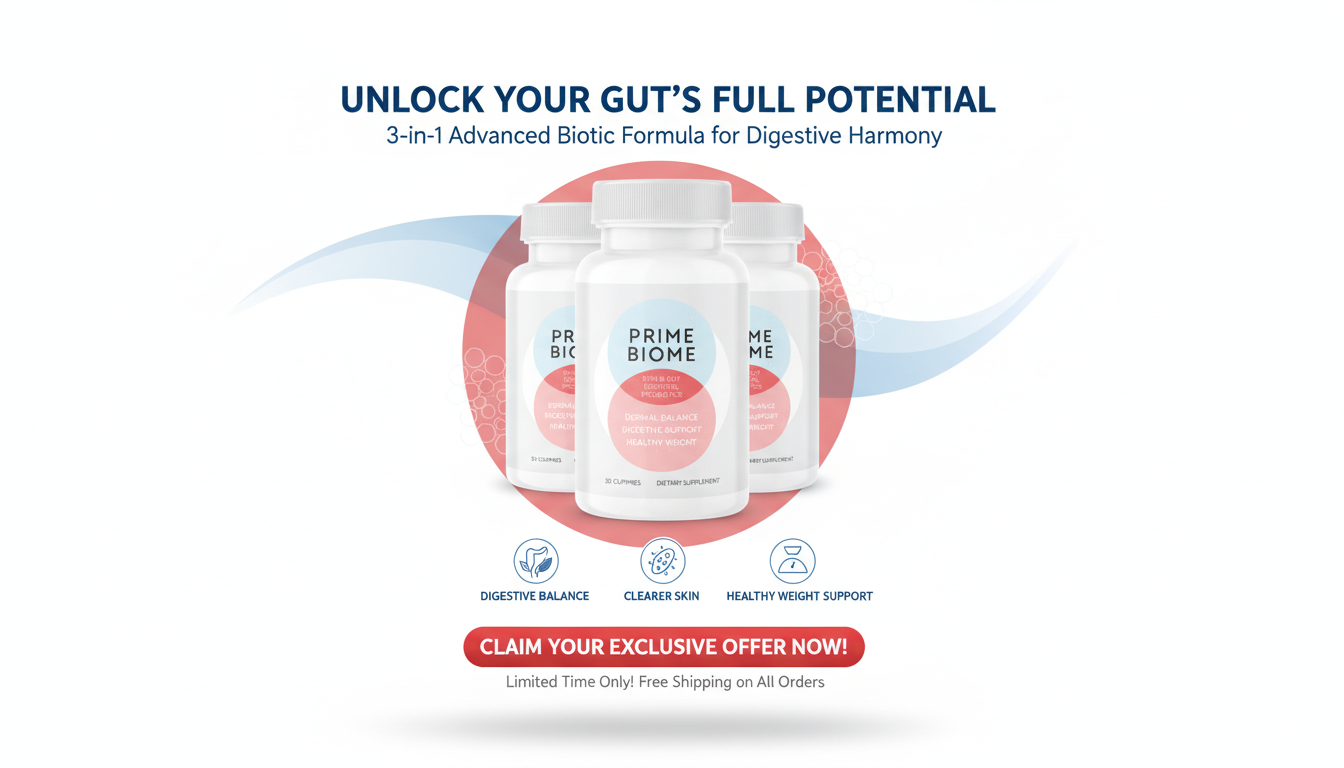
This is why formulas like PrimeBiome are gaining attention. It moves beyond generic probiotics by combining a potent blend of specific probiotic strains clinically studied for their effects on skin with other powerhouse ingredients. It contains key players like L. Rhamnosus and L. Paracasei to support the gut barrier, along with skin-specific nutrients like Marine Collagen, Hyaluronic Acid, and Vitamin C. This synergistic approach doesn’t just focus on the gut; it delivers a comprehensive solution designed to tackle skin aging directly at its source, addressing the crucial link between gut health and skin aging.
The Future of Skincare is Internal
The takeaway is clear: you can’t separate skin health from gut health. Treating your skin as an isolated organ is an outdated approach. By shifting your focus inward and nurturing your gut microbiome, you are addressing the root cause of many common skin concerns, including premature aging. A holistic strategy that combines a healthy lifestyle with powerful, targeted nutritional support provides the best path to achieving the radiant, resilient, and youthful skin you’ve been working so hard to attain.
Disclaimer: The information in this article is for educational purposes only and is not intended as medical advice. Always consult with a qualified healthcare professional before starting any new supplement or making significant changes to your diet or lifestyle, especially if you have a pre-existing medical condition.