The Unseen Battle: Why Stubborn Belly Fat Won’t Go Away
You follow the rules. You cut down on sugar, choose salads over sandwiches, and make time for the gym even on busy days. Yet, every time you look in the mirror, that persistent layer of belly fat remains, seemingly mocking your efforts. It’s a frustrating, demoralizing experience that leaves many people feeling defeated. If you’re doing everything right but still not seeing results, it’s not a lack of willpower. The truth is, there are hidden stubborn belly fat causes that typical diet and exercise plans fail to address.
This isn’t just about calories in versus calories out. Your body is a complex system of hormones, genetics, and cellular processes. Stubborn abdominal fat, particularly as we age, is often a symptom of deeper metabolic and hormonal shifts. Understanding these underlying factors is the first step toward finally overcoming this challenge and achieving the health and physique you’ve been working so hard for.
In this article, we’ll move beyond the surface-level advice and explore the scientific reasons why belly fat is so notoriously difficult to lose. We will uncover the cellular mechanisms at play and discuss how a new understanding of your body’s internal engine can pave the way for a more effective strategy.
Beyond the Basics: Visceral vs. Subcutaneous Fat
Before diving into the hidden causes, it’s important to understand that not all belly fat is the same. The fat in your abdominal area is primarily one of two types, and your body treats them very differently.
Subcutaneous Fat: The Pinchable Layer
This is the fat that lies just beneath the skin. It’s the soft, pinchable layer you can feel. While it can be cosmetically frustrating, subcutaneous fat is less metabolically active and poses fewer direct health risks compared to its deeper counterpart.
Visceral Fat: The Hidden Danger
Visceral fat is the real troublemaker. It’s stored deep within the abdominal cavity, wrapped around vital organs like the liver, pancreas, and intestines. You can’t see or pinch it, but it’s incredibly active from a metabolic standpoint. Visceral fat releases inflammatory substances and hormones that can disrupt normal bodily functions, contributing to insulin resistance and other serious health issues. Because of its location and hormonal activity, it’s often the most stubborn fat to lose.
The Deeper Stubborn Belly Fat Causes
If your efforts are falling short, it’s likely because one or more of these powerful biological factors are working against you. Let’s break down the science in simple terms.
1. The Cortisol Connection: Your Stress Hormone
In today’s fast-paced world, chronic stress is rampant. When you’re constantly stressed, your adrenal glands release cortisol. This hormone is essential for short-term survival (the “fight or flight” response), but consistently high levels can be disastrous for your waistline. Cortisol increases appetite, encourages cravings for sugary and fatty foods, and, most importantly, signals your body to store fat specifically in the abdominal region as visceral fat. It’s a survival mechanism that, in modern life, contributes directly to stubborn belly fat.
2. Insulin Resistance: The Sugar Traffic Jam
Insulin is a hormone that acts like a key, allowing sugar (glucose) from your bloodstream to enter your cells to be used for energy. When you consume too many refined carbohydrates and sugary foods over time, your cells can become “numb” to insulin’s effects. This is called insulin resistance. Your pancreas responds by pumping out even more insulin to try and get the job done. High insulin levels are a powerful signal to your body: “Stop burning fat and start storing it.” And again, the primary storage site for this process is the abdomen.

3. The Cellular Engine: A Look at Your Mitochondria
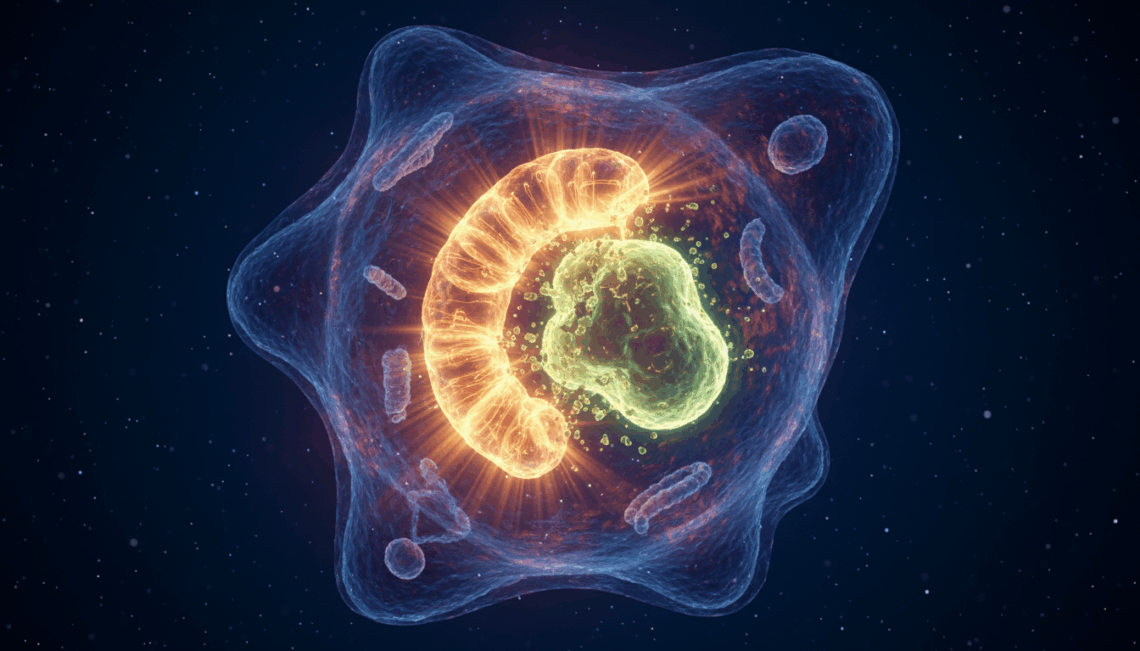
Perhaps the most overlooked cause lies deep within your cells. Think of your body as a city. This city is powered by trillions of tiny power plants called mitochondria. Their job is to take the food you eat and the fat you store and convert it into the energy your body needs to function. As you age, or due to lifestyle factors, the efficiency of these mitochondrial power plants can decline. They become less effective at burning fat for fuel. When your cellular engines are running slow, excess energy is more likely to be stored as fat rather than burned off. This cellular slowdown is a fundamental reason why weight loss becomes harder over time, regardless of your diet.
A Cellular Secret: The Power of Mitochondrial Uncoupling
So, if slowing mitochondria are a key problem, is there a way to make them work more efficiently? The answer may lie in a fascinating biological process known as “mitochondrial uncoupling.” It sounds complex, but the concept is quite simple.
What is Mitochondrial Uncoupling?
Normally, mitochondria burn fuel (like fat) to produce a molecule called ATP, which is the direct energy currency of your cells. Think of it as a highly efficient factory making a specific product (ATP). Mitochondrial uncoupling is like a “release valve” for this factory. It allows the mitochondria to burn fat and calories without necessarily producing ATP. Instead, the energy is released directly as heat. This process is one of the ways your body regulates its temperature.
Imagine a car engine idling in neutral. It’s burning fuel and producing heat, but it’s not driving the wheels forward. Similarly, uncoupling allows your cells to burn through fat reserves simply to generate warmth, making it a powerful, built-in mechanism for weight management. It effectively “uncouples” the burning of calories from the production of ATP, turning your cells into heat-generating, fat-burning furnaces.
Why This Process Declines
This natural fat-burning process can become less active with age, a sedentary lifestyle, and certain dietary patterns. When mitochondrial uncoupling slows down, your body’s ability to passively burn off excess energy decreases. The result is that more of the calories you consume are stored as fat because the cellular “release valve” isn’t opening as often as it should. This is one of the most significant yet least discussed stubborn belly fat causes.
Supporting Your Body’s Natural Fat-Burning Potential
Understanding these deep-seated causes empowers you to adopt a more intelligent strategy. The goal is not just to eat less and move more, but to support the very cellular machinery responsible for managing your weight.
Lifestyle Adjustments for Cellular Health
Certain lifestyle habits can help support healthy mitochondrial function. High-intensity interval training (HIIT), for example, has been shown to stimulate the production of new mitochondria. Additionally, consuming a diet rich in antioxidants from fruits and vegetables can help protect your existing mitochondria from damage. Managing stress through practices like meditation or yoga can help lower cortisol levels, reducing the hormonal signal to store belly fat.
A Novel Approach to Cellular Support
While lifestyle is fundamental, the scientific community is always exploring new ways to support the body’s metabolic processes. Recognizing the critical role of mitochondrial uncoupling, researchers have investigated compounds that can support this natural function. This has led to the development of innovative solutions designed to work with your body’s cellular engines.
One such groundbreaking approach is Mitolyn. It is a unique serum formulated to support the body’s natural mitochondrial uncoupling process. Instead of just focusing on appetite or metabolism in a general sense, it targets the fundamental mechanism of energy expenditure at the cellular level. By helping to encourage this natural process, it assists your body in using stored fat reserves for heat production, providing a modern solution based on the cutting-edge science of cellular health.
A New Perspective on a Stubborn Problem
Losing stubborn belly fat is not a simple question of discipline. It’s a biological puzzle involving hormones, stress, and the microscopic power plants inside your cells. By understanding the real stubborn belly fat causes, you can shift from a place of frustration to one of empowerment. It’s not about fighting against your body, but about learning to work with it.
By managing stress to control cortisol, balancing blood sugar to reduce insulin spikes, and supporting the health of your mitochondria, you create an internal environment that is conducive to fat loss. Instead of just treating the symptom, you begin to address the root cause, giving you a much greater chance of finally achieving lasting results and winning the battle against stubborn fat.
Important Disclaimer
The information provided in this article is for educational purposes only and is not intended as medical advice. The content is not meant to diagnose, treat, cure, or prevent any health condition. Always consult with a qualified healthcare professional before making any significant changes to your diet, exercise routine, or supplement regimen. Individual results may vary.