
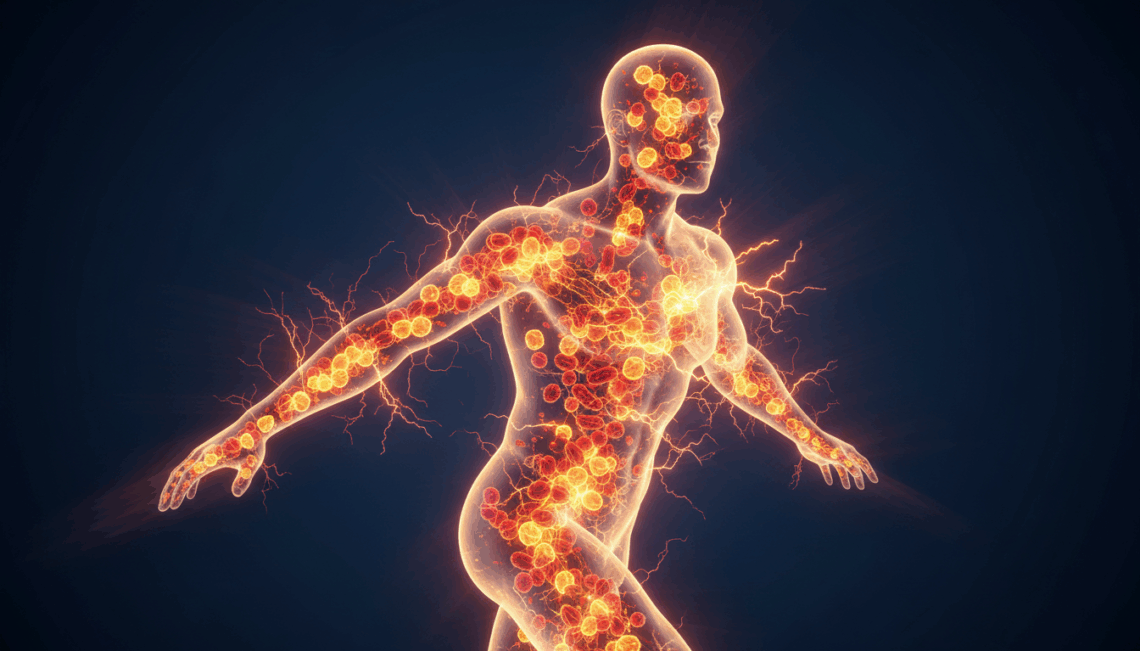
The Frustrating Reality of a Slowing Metabolism
You follow your diet plan, you’re consistent with your workouts, and you make conscious, healthy choices every day. Yet, the numbers on the scale refuse to budge, or worse, they creep upward. This experience is incredibly disheartening, and it often leads to one conclusion: you’re dealing with slow metabolism weight gain. It’s a silent battle fought by millions, a feeling that your own body is working against you, no matter how hard you try.
This isn’t just about aesthetics; it’s about the energy you lack in the afternoon, the frustration of clothes not fitting the way they used to, and the worry that something is fundamentally “off.” You might start to question every meal and every missed workout, falling into a cycle of guilt and confusion. If this sounds familiar, know that you are not alone, and it’s not a matter of willpower. The reasons behind a sluggish metabolism are often complex, rooted deep within our cellular biology.
Understanding the “why” is the first step toward finding a solution that works with your body, not against it. This article will explore the mechanics of metabolism, uncover the hidden factors that can cause it to slow down, and discuss actionable strategies to help you reclaim your energy and support your body’s natural fat-burning processes.
What Exactly Is Metabolism?
Metabolism is a word we hear all the time, but its meaning can be elusive. In simple terms, metabolism is the complex chemical process your body uses to convert the food and drink you consume into energy. This energy fuels everything you do, from breathing and circulating blood to thinking and moving. The total amount of energy, or calories, your body burns in a day is known as your total daily energy expenditure (TDEE).
The Key Components of Your Metabolism
Your TDEE is made up of three primary components:
- Basal Metabolic Rate (BMR): This is the most significant part of your metabolism, accounting for 60-75% of the calories you burn. It’s the energy your body needs to perform its most basic, life-sustaining functions at rest, like breathing, brain function, and cell production. This is what we typically refer to when we talk about a “fast” or “slow” metabolism.
- Thermic Effect of Food (TEF): Your body uses energy to digest, absorb, and metabolize the food you eat. TEF accounts for about 10% of your daily calorie burn. Interestingly, protein has a higher thermic effect than fats and carbohydrates, meaning your body works harder to process it.
- Physical Activity: This is the most variable component of your metabolism. It includes everything from structured exercise like running or lifting weights to non-exercise activity thermogenesis (NEAT), which covers daily movements like walking, typing, and even fidgeting.
Why Does Slow Metabolism Weight Gain Happen?
The belief that some people are born with a lightning-fast metabolism while others are destined to have a sluggish one is partly true, but it’s not the whole story. Several factors influence your metabolic rate, and many of them change throughout your life.
The Role of Age and Muscle Mass
One of the most well-known factors is age. As we get older, our metabolic rate naturally begins to decline. A primary reason for this is sarcopenia, the age-related loss of muscle mass. Muscle tissue is more metabolically active than fat tissue, meaning it burns more calories even at rest. As you lose muscle, your BMR decreases, contributing to gradual weight gain if you don’t adjust your caloric intake or activity level.
Hormonal Imbalances
Hormones are powerful chemical messengers that regulate countless bodily functions, including metabolism. An imbalance in key hormones can significantly contribute to slow metabolism weight gain. For example, the thyroid gland produces hormones that are critical for regulating your metabolic rate. An underactive thyroid (hypothyroidism) can cause a significant slowdown, leading to weight gain, fatigue, and other symptoms. Other hormones, like cortisol (the stress hormone) and insulin, also play crucial roles in how your body stores fat and uses energy.
The Cellular Engine: Mitochondria
Deep inside almost every cell in your body are tiny powerhouses called mitochondria. Their job is to take the nutrients from food and the oxygen you breathe and convert them into adenosine triphosphate (ATP), the primary energy currency of the cell. Think of them as the engines that run your body.
The health and efficiency of your mitochondria are directly linked to your metabolic rate. When your mitochondria are functioning optimally, your body is an efficient energy-burning machine. However, factors like aging, poor diet, and a sedentary lifestyle can lead to mitochondrial dysfunction. Inefficient mitochondria struggle to convert fat and sugar into energy, which can lead to:
- Reduced energy levels and persistent fatigue.
- An increased tendency for the body to store calories as fat.
- A general slowdown in your overall metabolic rate.
This is a critical, often overlooked aspect of metabolic health. Addressing the health of your cellular engines can be a game-changer for those struggling with what feels like an unexplainably slow metabolism.

Actionable Strategies to Support Your Metabolism
While you can’t change your genetics or your age, there are many lifestyle strategies you can implement to support and potentially improve your metabolic function. It’s about creating an environment where your body can operate at its best.
Prioritize Protein Intake
As mentioned earlier, protein has a higher thermic effect of food (TEF) than carbs or fats. Including a good source of protein in every meal can give your metabolism a small boost. More importantly, adequate protein is essential for building and maintaining muscle mass, which is a cornerstone of a healthy BMR. Aim for sources like lean meats, fish, eggs, dairy, legumes, and tofu.
Embrace Strength Training
If there is one non-negotiable activity for fighting metabolic slowdown, it’s resistance or strength training. Lifting weights, using resistance bands, or doing bodyweight exercises helps build and preserve precious muscle tissue. The more muscle you have, the more calories your body burns around the clock, even when you’re sleeping. Aim for at least two full-body strength training sessions per week.
Stay Hydrated
Water is essential for nearly every bodily process, including metabolism. Even mild dehydration can cause your metabolic rate to dip. Make a conscious effort to drink water throughout the day. A simple tip is to drink a glass of water before each meal, which can also help with satiety.
Don’t Underestimate NEAT
NEAT, or non-exercise activity thermogenesis, refers to all the calories you burn from activities that aren’t formal exercise. This includes walking to your car, taking the stairs, cleaning the house, or tapping your feet. These small movements can add up to a significant number of calories burned over the day. Look for opportunities to be more active in your daily routine—it all makes a difference.
The Role of Targeted Nutritional Support
For individuals who have diligently implemented lifestyle changes but still struggle with slow metabolism weight gain, exploring targeted nutritional support can be a logical next step. While a balanced diet is the foundation, certain compounds can help support the underlying cellular processes that govern metabolic health.
This is where understanding the science of mitochondria becomes powerful. Supporting mitochondrial health can be a key strategy for addressing a sluggish metabolism at its source. Scientists have been studying the effects of specific polyphenols—natural compounds found in plants—on cellular energy production. These compounds can help protect mitochondria from damage and support their efficiency in converting fuel into energy.
One product designed around this very principle is Mitolyn. It was formulated based on research into the “Mitochondria-Obesity Link,” aiming to provide a concentrated blend of polyphenols and other nutrients that support mitochondrial function. The goal is not to be a magic pill, but a tool that works in synergy with your healthy lifestyle choices. By targeting the body’s cellular engines, it aims to help reactivate your body’s natural ability to burn fat for energy, which can be particularly helpful when age-related slowdown or other factors have put a damper on your metabolic rate.
If you feel like you’ve hit a wall and suspect that a deeper, cellular issue is at play, exploring a solution like Mitolyn could offer the targeted support you need to complement your diet and exercise efforts.
Conclusion: A Holistic Approach to a Healthier Metabolism
The battle against slow metabolism weight gain is not a simple one, and it’s rarely won through extreme dieting or endless cardio alone. True success lies in a holistic understanding of your body. It involves building and maintaining muscle through strength training, fueling your body with adequate protein and hydration, staying active throughout the day, and managing hormonal health through proper stress management and sleep.
Furthermore, recognizing the crucial role of your cellular mitochondria opens up new avenues for support. By focusing on the very source of your body’s energy production, you can address metabolic slowdown from the inside out. Be patient and compassionate with yourself. It took time for these metabolic changes to occur, and it will take a consistent, multi-faceted approach to encourage your body to function more efficiently again. Always consult with a healthcare professional before starting any new supplement or making significant changes to your diet and exercise regimen to ensure it’s the right choice for your individual health needs.